
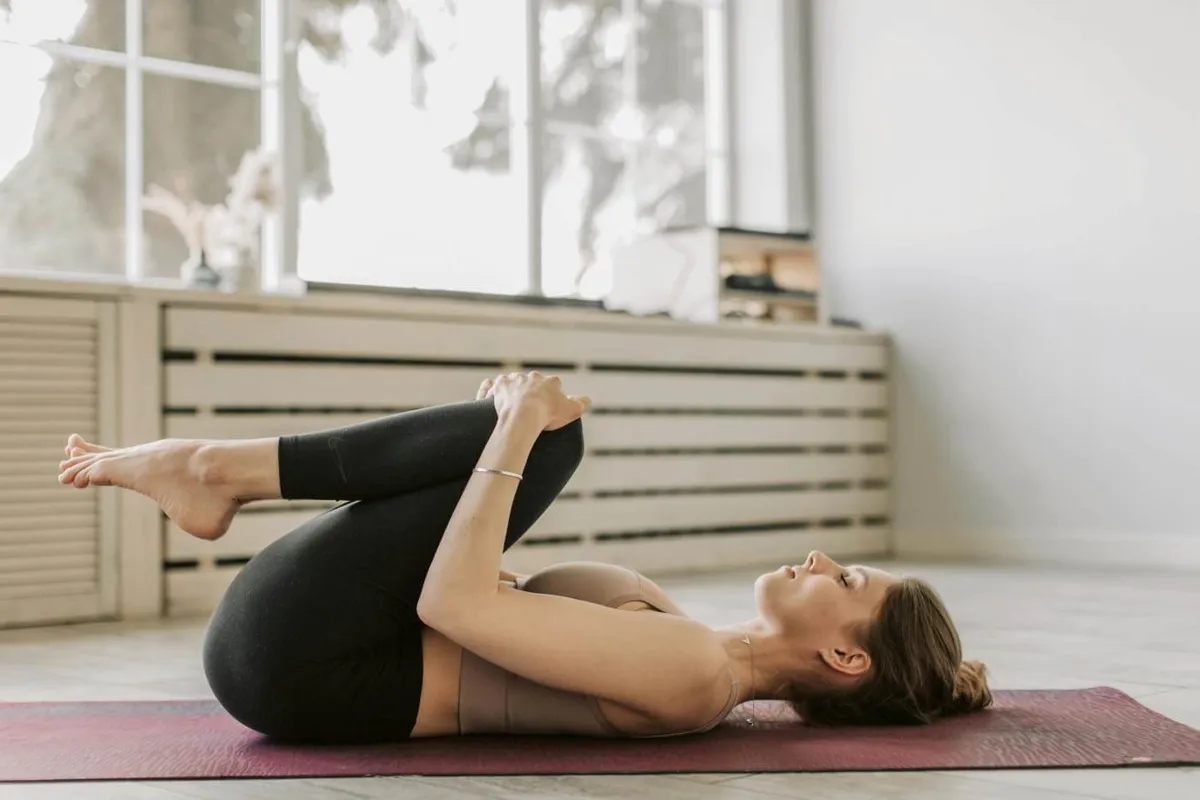
Yoga for Core Strength
Live, expert-guided yoga that builds a strong, balanced centre using nothing but your body weight.
Can Yoga Build Core Strength?
Yes. At YogShri, live expert-guided classes use held bodyweight poses that may help build real strength and control through the abdominals, obliques, and lower back. Results vary.
- Works the Whole Core
- Front, sides, deep muscles, and back body all get attention
- Builds Control
- Held poses train stability, not just repetitions
- Supports the Spine
- A balanced centre helps support the back in daily movement
- Needs No Equipment
- Your own body weight provides all the resistance
Why Students Choose YogShri
Core poses lose most of their value the moment alignment slips. Our live classes mean a certified instructor catches that as it happens.
Small groups of 10 to 15 for real focus
You are never just a tile on a screen. Your instructor can see when your hips drop in plank or your back arches in boat.
100+ live classes, morning to night
Join a session that fits your day - early morning, lunch break, or evening. Every class is live and interactive, never pre-recorded.
Real-time form correction and feedback
Get clear cues on bracing without holding the breath, and an honest nudge to drop the knees before your form gives out.
A program shaped around you
We start with a one-on-one chat about your current strength and goals, then build a practice that progresses at your pace.
Who Can Benefit from Yoga for Core Strength?
Every pose here has a knees-down or reduced version, so you can start wherever your strength is today and build from there.
Complete Beginners
Start with knees-down variations. Good alignment in an easier version builds more strength than a hard one done poorly.
Desk Workers
Long hours seated leave the deep core underused. Held poses wake up the muscles that support you when you stand.
Runners & Cyclists
A stable centre helps your limbs work efficiently. Core work complements endurance training rather than competing with it.
Anyone Wanting Better Posture
Strength through the front and back of your torso is what lets you hold yourself upright without effort.
People Returning to Exercise
Bodyweight holds are a controlled, low-equipment way back in, and easy to scale down on a tired day.
Anyone Bored of Crunches
These poses train stability rather than repetitions, which is closer to how your core actually works day to day.
Five Yoga Poses for Core Strength
These five cover the front, the sides, the deep abdominals, the back body, and the glutes - so together they build a balanced centre rather than just abs. Take the easier version of any pose, and stop a hold when your alignment starts to slip rather than pushing to a time.
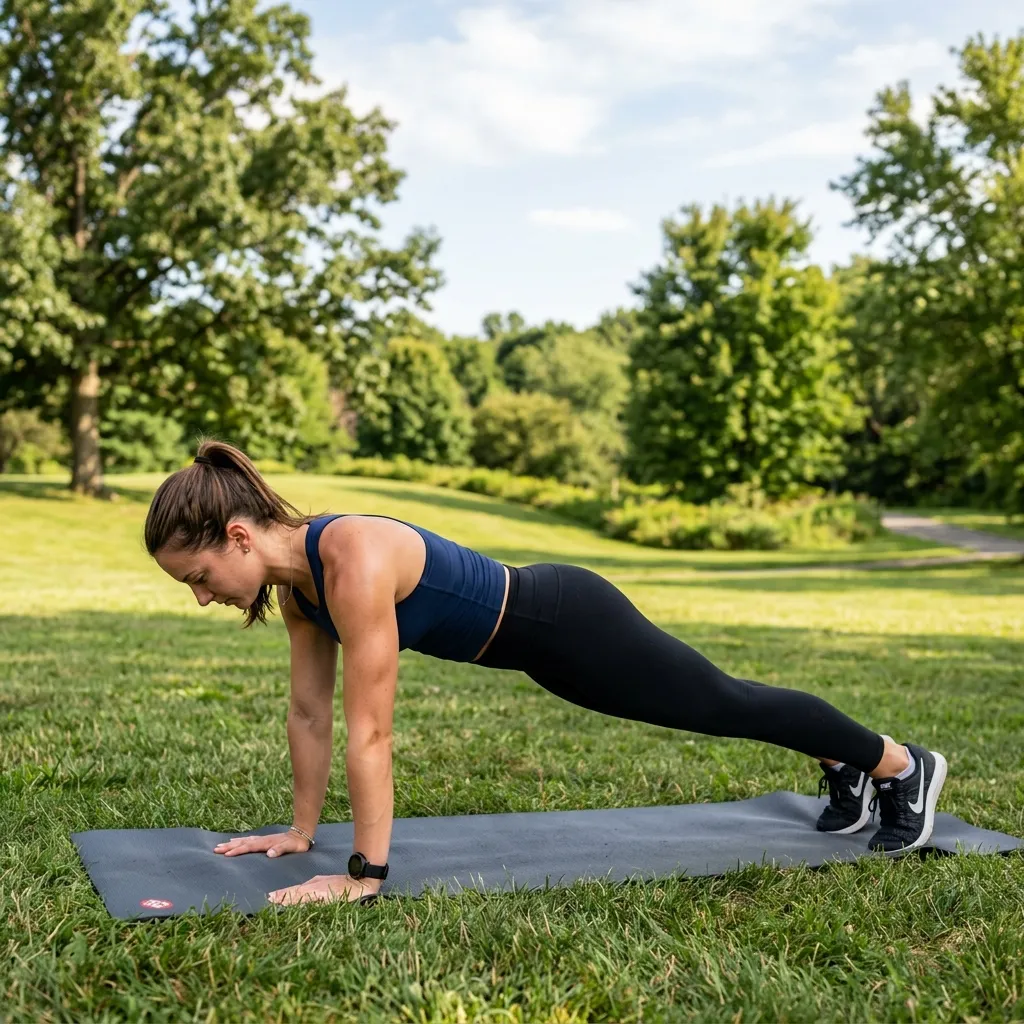
Plank Pose
A straight-line hold that asks the whole front of the core to keep you steady.
- Start on hands and knees, hands directly under the shoulders
- Step the feet back so the body forms one straight line, or keep the knees down
- Draw the lower ribs gently in so the lower back does not sag
- Keep the neck long and breathe steadily - never hold the breath
- Come down the moment the hips start to drop. A shorter clean hold is worth far more
Why it helps: May help build deep core strength and the ability to hold your body in one line - the foundation everything else builds on.
Start Your Free Trial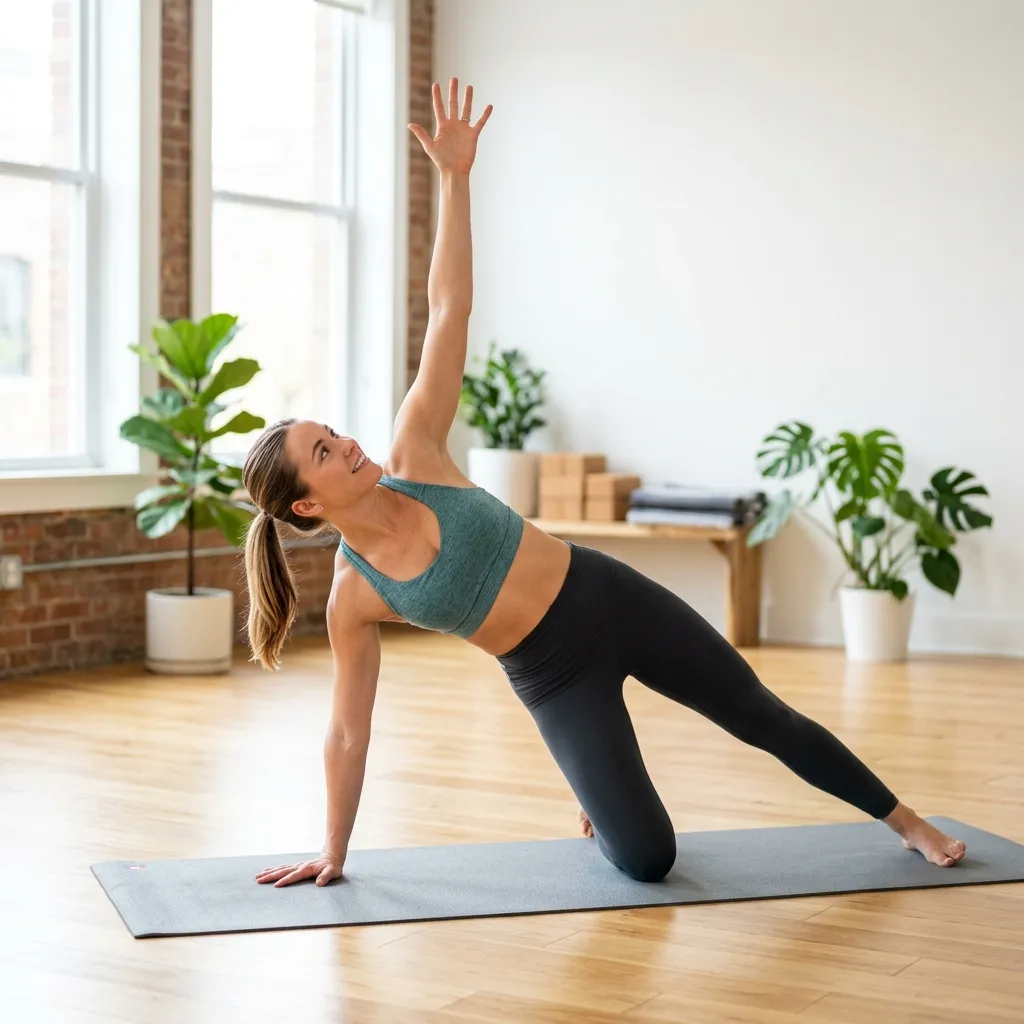
Side Plank
A sideways hold, shown here with the bottom knee down for accessibility.
- Lie on your right side and prop up onto the right forearm, elbow under the shoulder
- Bend the bottom knee and rest it on the mat - this is the version to start with
- Lift the hips so the body makes a long diagonal line
- Reach the top arm up, or rest it along your side
- Lower slowly and repeat on the other side. Straighten the bottom leg only when this feels easy
Why it helps: Works the obliques at the sides of the waist, the part of the core most routines skip entirely.
Start Your Free Trial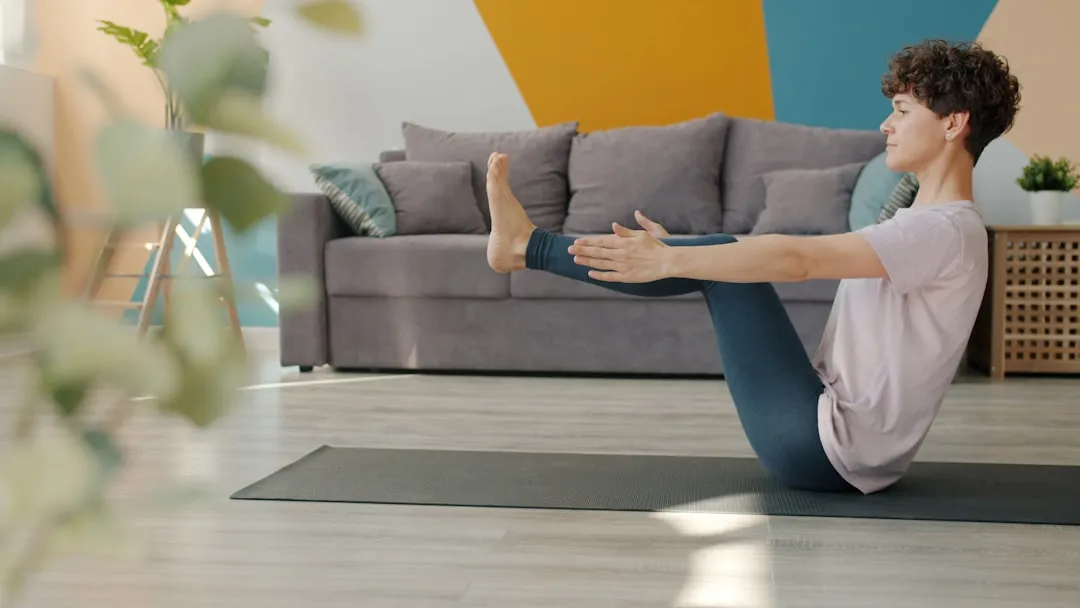
Boat Pose
A seated balance on the sitting bones with the legs lifted.
- Sit with the knees bent and feet flat, hands behind the thighs
- Lean back slightly and lift the chest, finding a long straight spine
- Lift the feet so the shins come parallel to the floor, keeping the knees bent
- Keep holding behind the thighs if that helps, and keep the neck relaxed
- Lower down if the lower back starts to round - a rounded back means the core has stopped working
Why it helps: Targets the deep abdominal muscles directly, and teaches you to keep a long spine while they work hard.
Start Your Free Trial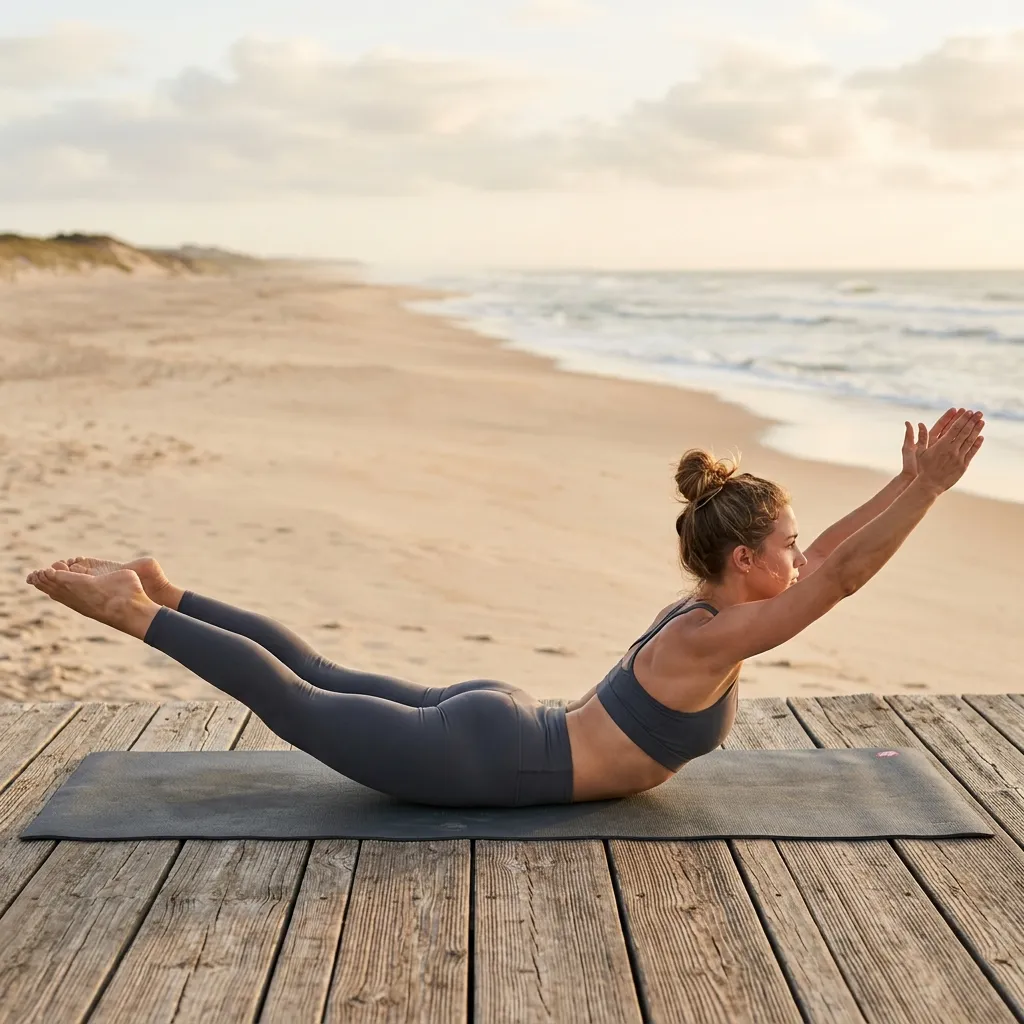
Locust Pose
A face-down lift that strengthens the back of the core.
- Lie on your front with the arms alongside your body, palms down
- Rest the forehead down and lengthen the back of the neck
- On an inhale, lift the chest and the legs a small way off the mat
- Keep the lift modest and the neck long - height is not the point here
- Lower slowly on an exhale and rest before repeating
Why it helps: The essential counterbalance. Strengthening the lower back and mid-back is what keeps a strong front from creating imbalance.
Start Your Free Trial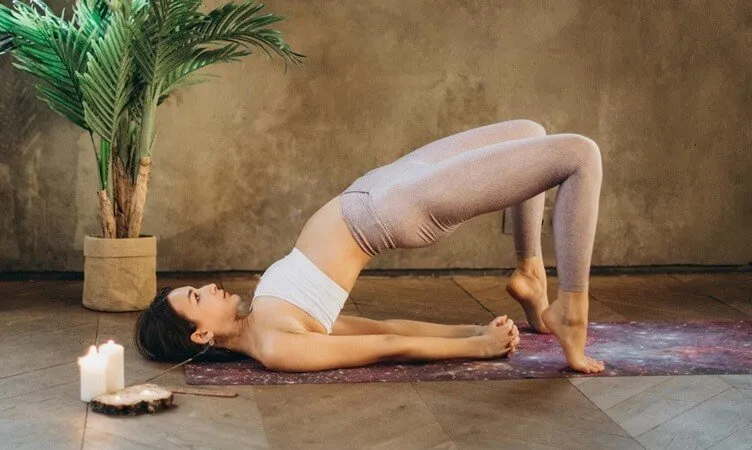
Bridge Pose
A supine hip lift that connects the glutes with the deep core.
- Lie on your back with knees bent and feet flat, hip-width apart
- Press through the feet and lift the hips, squeezing the glutes
- Keep the knees pointing forward rather than rolling apart
- Draw the lower ribs gently in so the lift comes from the hips, not the lower back
- Lower slowly, one vertebra at a time
Why it helps: Brings the glutes into the picture, which is what makes a strong core actually useful for supporting the back.
Start Your Free TrialThe Benefits ofYoga
A consistent core practice offers several connected benefits that support a strong, stable, comfortable body.
- Builds Real StrengthHeld bodyweight poses build genuine strength through the whole torso.
- Improves StabilityTraining control rather than repetitions is closer to how the core actually works.
- Supports PostureStrength front and back is what lets you hold yourself upright with ease.
- Supports the SpineA balanced centre helps support the back through everyday movement.
- Builds StaminaHolding poses steadily builds endurance as well as raw strength.
- Supports CirculationMindful movement and steady breathing support healthy blood flow.
- Builds Body AwarenessYou learn to feel when alignment slips, which carries into everything else.
- Supports Rest & RenewalBalanced effort and recovery is what lets strength actually build.
Common Mistakes to Avoid
Core work rewards precision over duration. Almost all the value is lost the moment alignment goes.
Letting the hips sag in plank
Drop the knees instead. A knees-down plank in one clean line builds more strength than a full plank with the lower back collapsing.
Holding the breath while bracing
Keep breathing steadily throughout. If you have to hold your breath to stay in a pose, take the easier version.
Only training the front of the core
Include back-body work like locust every session. A strong front with a weak back creates the imbalance you were trying to fix.
Straining the neck in boat pose
Keep the neck long and relaxed and lift from the chest. If the neck is working, the legs are too high - lower them.
Chasing longer holds every session
Quality beats duration. Come out when form slips rather than grinding to a number, and progress will actually come faster.
Doing intense core work every day
Leave a rest day between sessions. Core muscles need recovery to get stronger, just like any others.
Practising Core Work Safely
This is general wellness guidance rather than medical advice. Core work suits most people and works best alongside your healthcare provider guidance - please check with them first if you are pregnant or recently postnatal, have diagnosed abdominal separation or a hernia, or have a back, neck, or wrist injury.
Do
- Warm up before any held core pose
- Take the knees-down version whenever you need it
- Keep breathing steadily rather than bracing and holding
- Work the back body as much as the front
- Leave a rest day between core sessions
- Come out of a hold when your alignment slips
Avoid
- Letting the lower back sag or arch under load
- Holding your breath to get through a pose
- Straining the neck to help lift in boat or locust
- Loading the wrists if they are sore - use forearms instead
- Any sharp pain or doming along the midline of the belly
- Pushing to a time target once form has gone
Key takeaways
- Held bodyweight yoga poses may help build genuine core strength and control. Results vary from person to person.
- Your core wraps all the way around. Train the sides and the back body, not just the abdominals at the front.
- A knees-down version with clean alignment builds more strength than a harder pose done badly.
- Keep breathing. If you have to hold your breath to stay in a pose, take the easier option.
- Two or three sessions a week with a rest day between is plenty, and this works best alongside your healthcare provider guidance.
Explore Yoga for Related Goals
Yoga for the Lower Back
Gentle, beginner-friendly yoga for your lower back. Instructor-guided poses and mindful movement to support mobility and everyday comfort.
Yoga for Legs
Build stronger, more flexible legs with live, expert-guided yoga. Simple poses for hamstrings, quads, and calves, plus safe practice tips. All levels welcome.
Meditation for Sleep
Five meditation techniques you can do lying in bed to help quiet a busy mind and drift off more easily. Guided live by certified instructors. Beginners welcome.
Learn More from Our Journal
Simple Breathing Exercises to Feel Calmer
Four straightforward breathing exercises you can do anywhere, when to use each one, and the one habit that makes the biggest difference.
How Long Does It Take to Get Flexible?
A realistic look at how flexibility changes with regular yoga, why consistency matters more than intensity, and what to expect week by week.
How Do Live Online Meditation Classes Work?
What happens in a live online meditation session, whether your camera stays on, what to sit on, and how a live class differs from using an app.
Questions About Yoga for Core Strength
Can yoga really build core strength?
Yes. Poses such as plank, side plank, and boat ask the core to hold your body weight steady, which builds genuine strength and control. Yoga also works the back body, which many core routines neglect. Results vary from person to person.
Is the core just your abs?
No, and this is the most useful thing to know. Your core wraps all the way around - the abdominals at the front, the obliques at the sides, the deep muscles underneath, and the lower back and glutes behind. Training only the front creates imbalance.
How often should I do core work?
Two or three sessions a week with a rest day between is plenty. Core muscles need recovery time like any others, so daily intense work is usually counterproductive.
I cannot hold a full plank. Where do I start?
Drop the knees. A knees-down plank with good alignment builds more strength than a full plank with the hips sagging, and it is the sensible place to begin.
Will core yoga give me visible abs?
Core work builds strength and control underneath. Whether muscle definition shows depends on many other factors including overall body composition, so focus on what you can feel improving rather than what you can see.
Why does my neck hurt during boat pose?
Usually because the neck is straining to help. Keep the chest lifted and the neck long and relaxed, and lower the legs or hold behind the thighs until the core can do the work on its own.
Is core work good for my back?
A balanced core, worked front and back, helps support the spine in everyday movement. Please work with your doctor or physiotherapist first if you have a back injury or diagnosed condition.
Should I check with anyone before starting?
Yes, if you are pregnant or recently postnatal, have a hernia, a back or wrist injury, or diagnosed abdominal separation, please check with your healthcare provider first.
Sources & further reading
- Yoga: What You Need To Know — National Center for Complementary and Integrative Health (NCCIH)
- Core exercises: Why you should strengthen your core muscles — Mayo Clinic
- The real-world benefits of strengthening your core — Harvard Health Publishing
- Strength and flexibility exercises — NHS
- Physical Activity Guidelines for Americans — U.S. Department of Health & Human Services
Ready to Build a Stronger Centre?
Book a friendly, no-pressure consultation with YogShri. We will find out where your strength is today and what you want to build toward, then design a practice that progresses with you.