
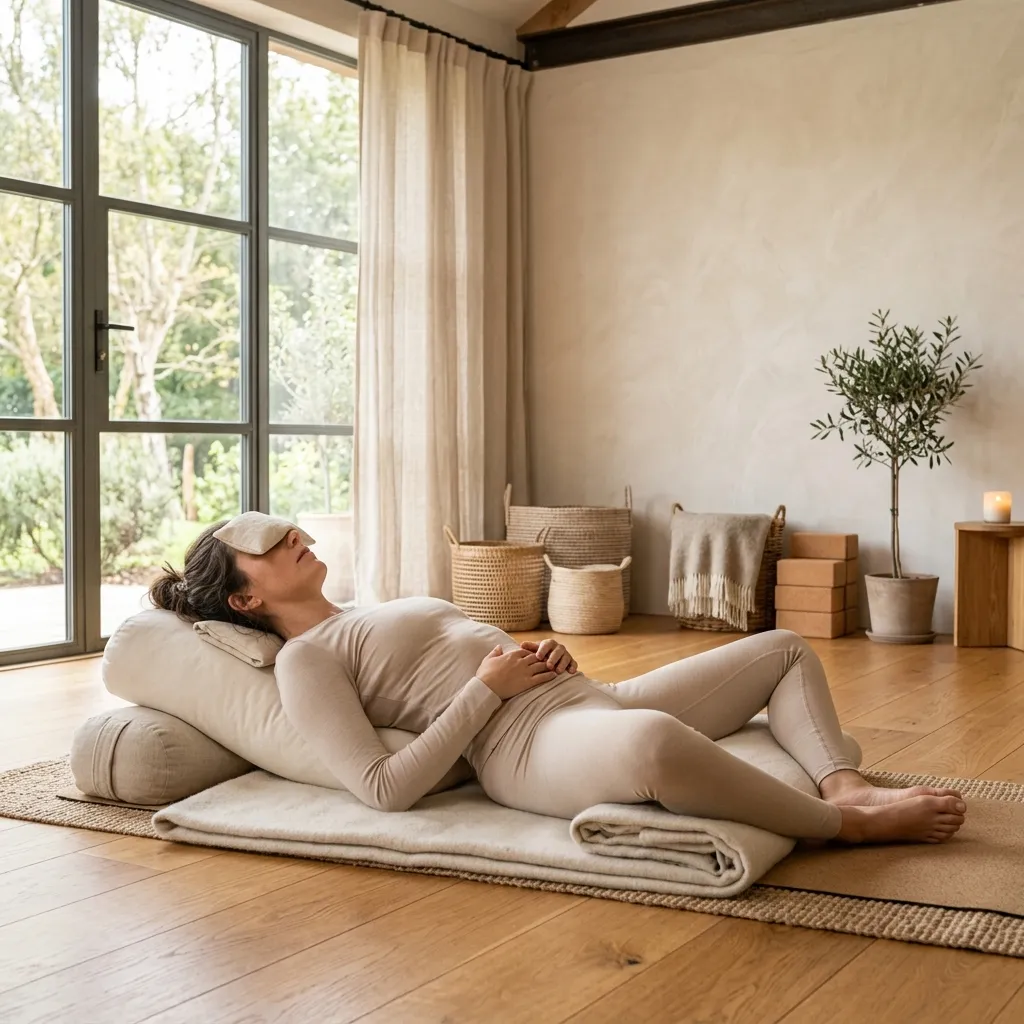
Yoga for Better Sleep
A gentle bedtime sequence, guided live, to help you unwind and settle into a more restful night.
Can Yoga Help You Sleep Better?
Yes. At YogShri, live expert-guided evening classes use slow, supported poses and longer exhales that may help you unwind and settle more easily at bedtime. Results vary.
- Settles the Body
- Slow supported poses help release the tension of the day
- Quiets the Mind
- A longer exhale gives a racing mind something steady to follow
- Builds a Wind-Down
- A short nightly routine signals to your body that sleep is coming
- Works in Bed
- Every pose here can be done on your mattress
Why Students Choose YogShri
Our live evening classes give you a scheduled reason to stop scrolling and wind down, with a certified instructor guiding the pace.
Small groups of 10 to 15 for real focus
You are never just a tile on a screen. Your instructor can suggest the prop or variation that helps you settle.
Evening sessions to suit your bedtime
Join a calming class in the hour before bed. Every session is live and interactive, never pre-recorded.
Real-time pacing and prop guidance
Get clear cues on how to support each pose with cushions and blankets so you can genuinely relax rather than hold yourself up.
A routine shaped around your evening
We start with a one-on-one chat about your evenings and how you sleep, then build a short routine you will actually keep.
Who Can Benefit from Yoga for Better Sleep?
You do not need to be flexible or experienced. Every pose here is slow, supported, and can be done on a bed.
People Who Struggle to Switch Off
If your mind speeds up the moment your head hits the pillow, a wind-down routine gives it somewhere gentler to land.
Shift Workers & Late Finishers
When work runs late, a short calming sequence helps mark the end of the day even if bedtime keeps moving.
Anyone Scrolling Before Bed
Ten quiet minutes on the mat is a far kinder transition into sleep than a screen right up until lights out.
Busy Parents & Caregivers
When the evening finally goes quiet, a few supported poses help your body catch up with the calm.
Frequent Travellers
A familiar short routine travels with you and needs nothing but a floor or a bed.
Complete Beginners
No experience needed. Nothing here is strenuous, and every pose has a fully supported version.
Five Calming Poses for Better Sleep
Work through these in order - each one asks less of you than the last, finishing lying completely still. Keep the lights low, move slowly, and let the exhale be a little longer than the inhale throughout. All five work on a bed.
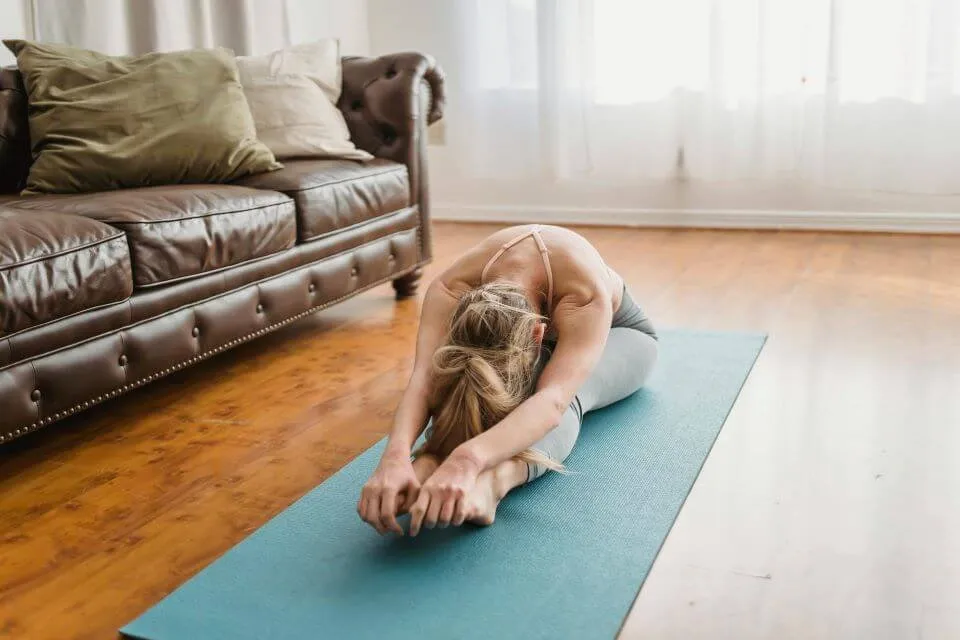
Seated Forward Fold
A slow seated fold that quiets the senses and turns your attention inward.
- Sit with the legs extended, on a cushion if the lower back rounds
- Bend the knees generously - this is about folding, not reaching
- Fold slowly forward and rest the hands wherever they land
- Let the head hang heavy and the shoulders soften
- Stay and breathe slowly, rolling up gently when you are ready
Why it helps: A gentle, unhurried fold that many people find naturally settling at the end of the day.
Start Your Free Trial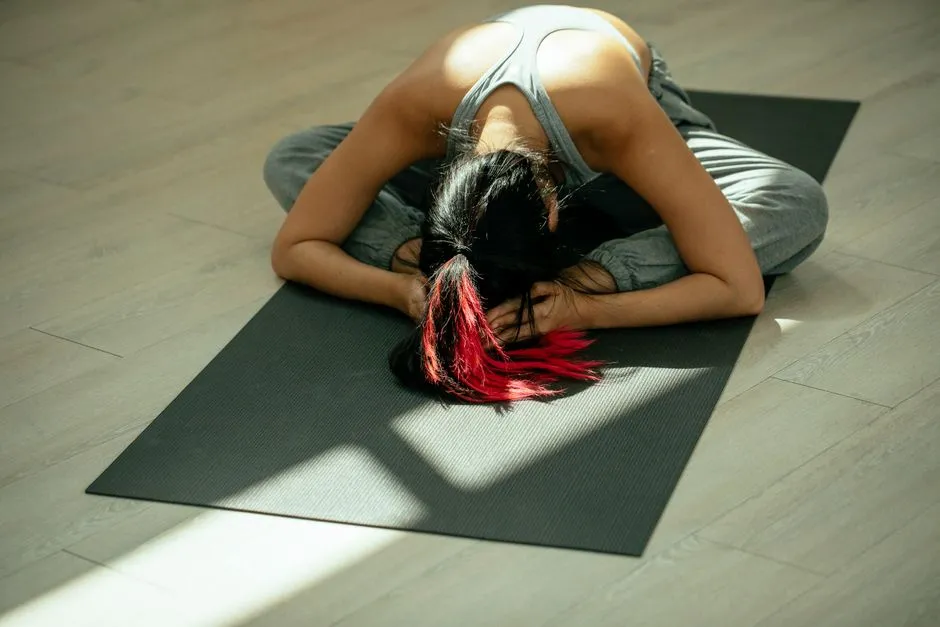
Butterfly Forward Fold
A seated hip release with a soft forward fold over the legs.
- Sit tall and bring the soles of the feet together, knees falling open
- Sit on a cushion if that makes the spine feel easier
- Slide the feet further away for a gentler version
- Fold forward only as far as is comfortable, letting the head hang
- Breathe slowly and let the knees soften down under their own weight - never press them
Why it helps: May help release the hips, where a lot of everyday tension quietly collects by evening.
Start Your Free Trial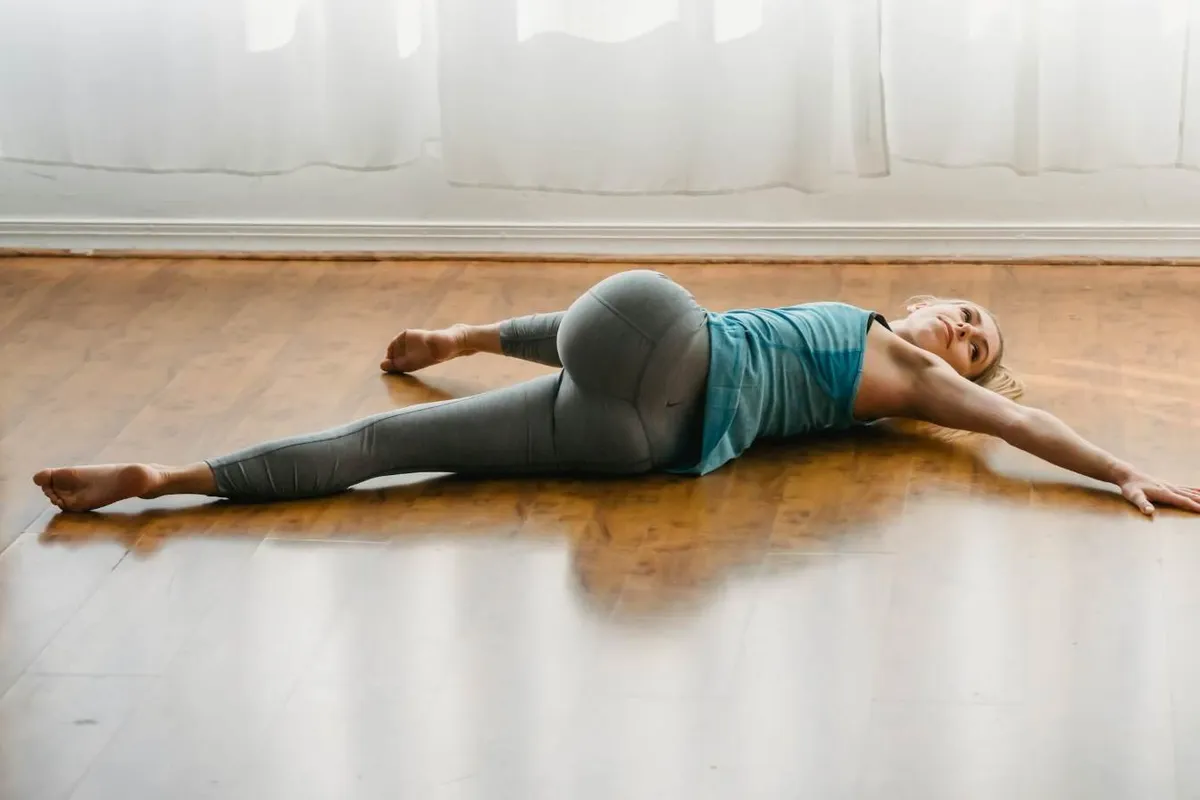
Reclined Twist
A restful lying-down twist that eases the back and shoulders.
- Lie on your back and hug both knees in
- Let the knees drop slowly to the right, resting them on a cushion
- Open the arms into a T and turn the gaze softly to the left
- Rest here and breathe, keeping the shoulders heavy
- Return to centre and repeat on the other side
Why it helps: Releases physical tension through the back and hips while you are already lying down and supported.
Start Your Free Trial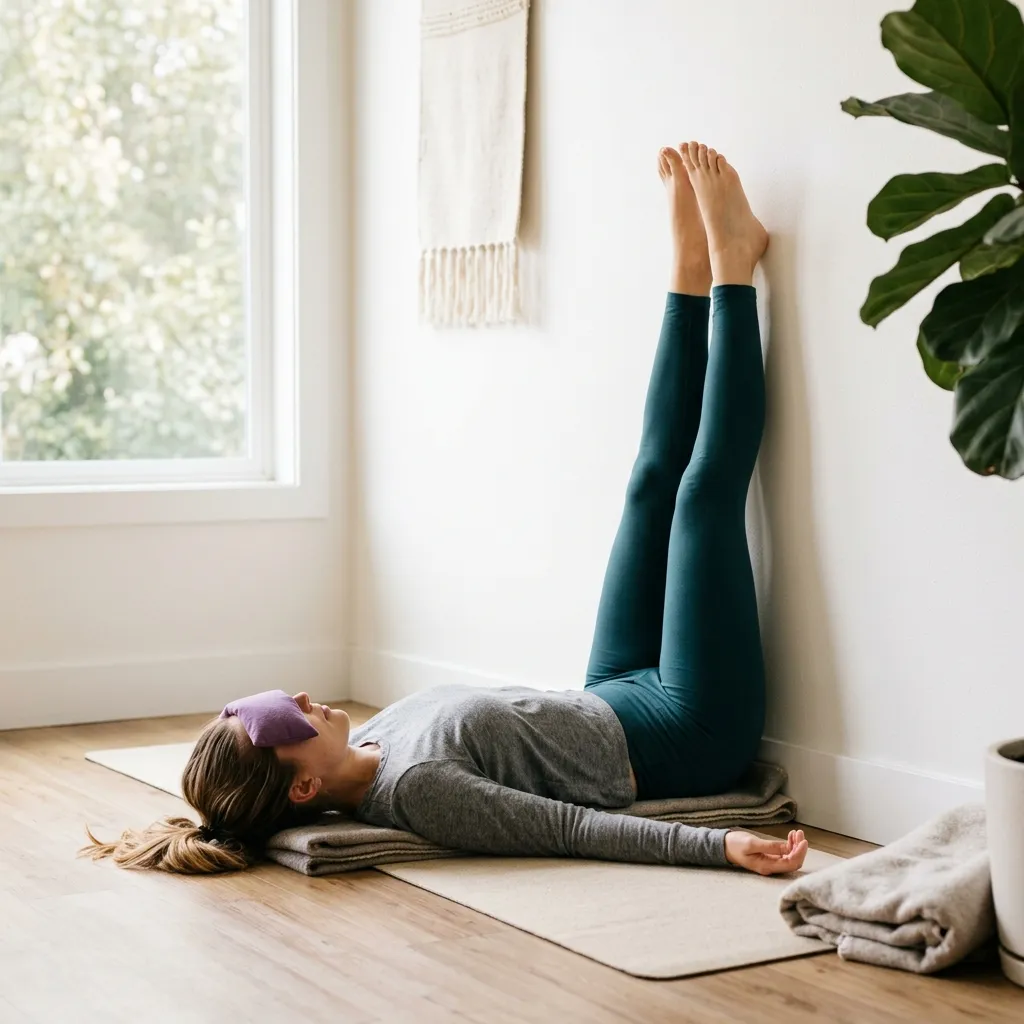
Legs-Up-the-Wall
A fully supported rest with the legs resting up a wall or headboard.
- Sit sideways beside a wall, then swing the legs up as you lie back
- Shuffle the hips as close to the wall as is comfortable
- Rest a folded blanket under the hips and keep a soft bend in the knees
- Let the arms rest open, palms up, and soften the jaw
- Stay and breathe slowly, then roll to one side to come out
Why it helps: Asks nothing of you at all. Many people find a few quiet minutes here the most settling part of the evening.
Start Your Free Trial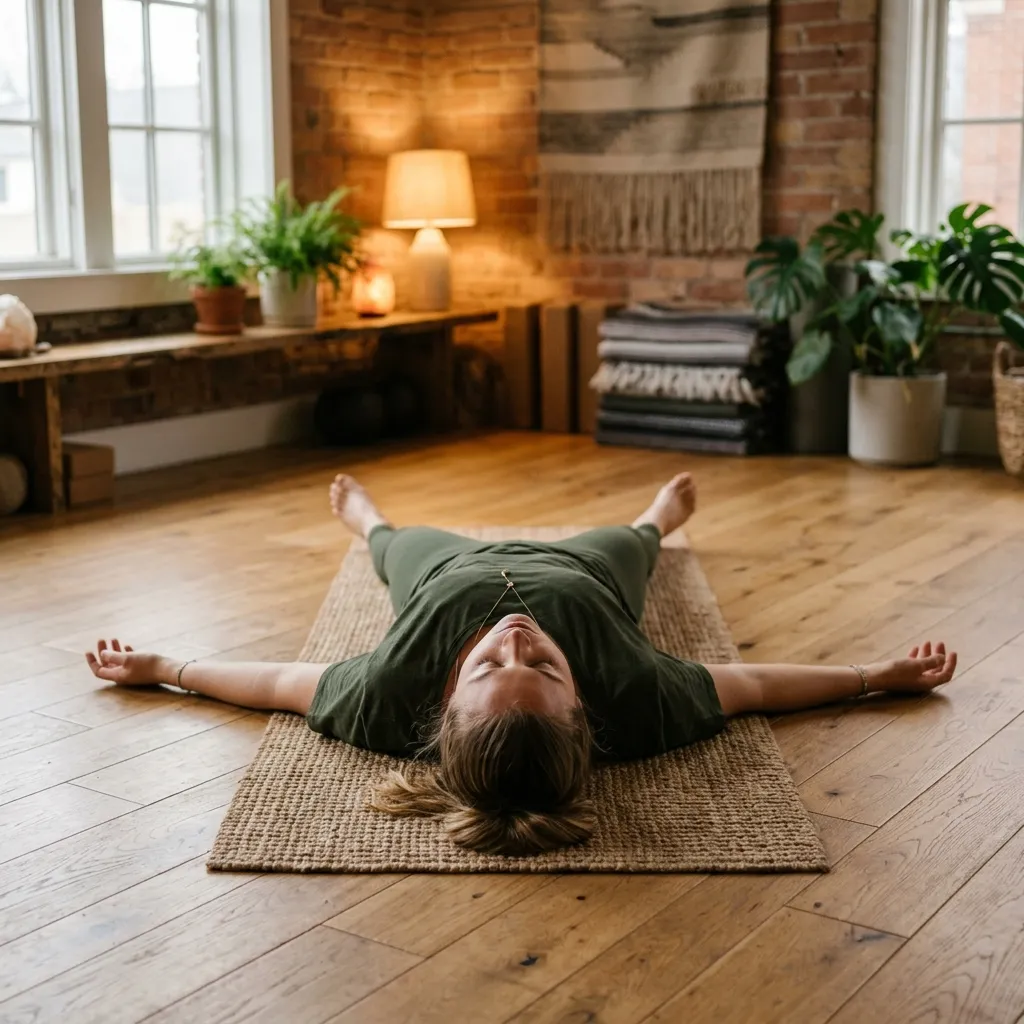
Final Rest
Lying completely still, letting the body go heavy.
- Lie flat on your back with the arms resting a little away from the body, palms up
- Slide a cushion under the knees if the lower back prefers it
- Let the whole body go heavy and soften the jaw and forehead
- Breathe naturally and let the exhale be a little longer
- Stay as long as you like. If you are in bed, simply let yourself fall asleep here
Why it helps: The natural bridge between practice and sleep. If you drift off here, that is rather the point.
Start Your Free TrialThe Benefits ofYoga
A short, consistent evening practice offers several connected benefits that support restful nights and easier mornings.
- Supports Restful SleepA calming routine helps many people wind down and settle more easily at bedtime.
- Eases TensionSlow supported poses help release the physical tightness the day leaves behind.
- Supports Stress ReliefA few quiet minutes gives a busy mind somewhere steady to rest.
- Supports Rest & RenewalSupported shapes and slow breath encourage genuine relaxation, not just stopping.
- Builds Body AwarenessYou start noticing tension earlier, while it is still easy to soften.
- Creates a Wind-Down CueA repeated nightly routine becomes a signal that sleep is on the way.
- Needs No EquipmentA bed, a cushion, and ten quiet minutes is genuinely all it takes.
- Supports Steady BreathPractice makes a longer, calmer exhale easier to find when you need it.
Common Mistakes to Avoid
An evening practice works differently from a morning one. These are the habits that get in the way of winding down.
Doing an energising flow before bed
Save Vinyasa and strong backbends for daytime. Evenings want slow, supported shapes that let the body settle rather than wake up.
Holding poses without support
Use cushions, blankets, and a wall generously. If you are working to stay in a shape, you are not relaxing in it.
Practising with bright lights and a screen nearby
Dim the lights and leave the phone in another room. The environment does as much work as the poses.
Approaching it as exercise to complete
There is nothing to achieve here. Going slower and doing less is the whole point of an evening sequence.
Only trying it on nights you cannot sleep
Practise on easy nights too. A familiar routine is far more effective than something you attempt for the first time at 2am.
Skipping the final rest to get into bed
The last few minutes lying still are what carry the calm into sleep. If you are already in bed, just stay there.
Practising Safely Before Bed
This is general wellness guidance rather than medical advice. A gentle evening practice suits most people and works best alongside your healthcare provider guidance - please speak with them if sleep difficulties are persistent, or before starting if you are pregnant or have a heart, blood pressure, or eye condition.
Do
- Dim the lights and keep the room quiet
- Support every pose with cushions and blankets
- Let the exhale be a little longer than the inhale
- Move slowly and stay well within a comfortable range
- Practise on the same nights each week to build the habit
- Finish lying still for a few minutes, or simply fall asleep
Avoid
- Strong backbends, fast flows, or anything energising
- Inversions such as headstand or shoulderstand before bed
- Holding the breath or straining to reach a count
- Deep stretching into cold muscles late at night
- Screens and bright light during and after the practice
- Using yoga as a replacement for professional care for ongoing sleep problems
Key takeaways
- A slow, supported evening practice may help you wind down and settle more easily at bedtime. Experiences vary from person to person.
- Keep everything gentle. Energising flows, strong backbends, and inversions belong earlier in the day.
- Making the exhale a little longer than the inhale is the simplest way to help the body settle.
- Support each pose properly with cushions and blankets - relaxing is impossible while you are holding yourself up.
- Ten to fifteen minutes most nights builds a wind-down cue, and every pose here works on a bed.
Explore Yoga for Related Areas
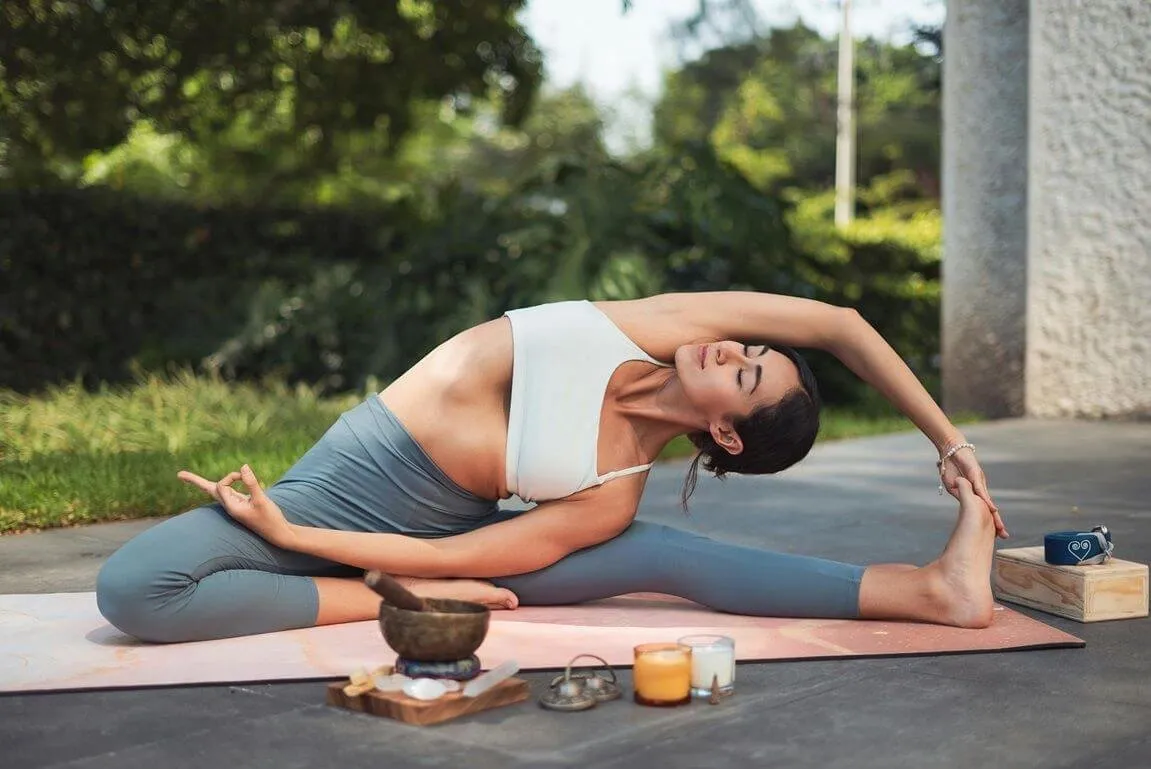
Yoga for the Lower Back
Gentle, beginner-friendly yoga for your lower back. Instructor-guided poses and mindful movement to support mobility and everyday comfort.
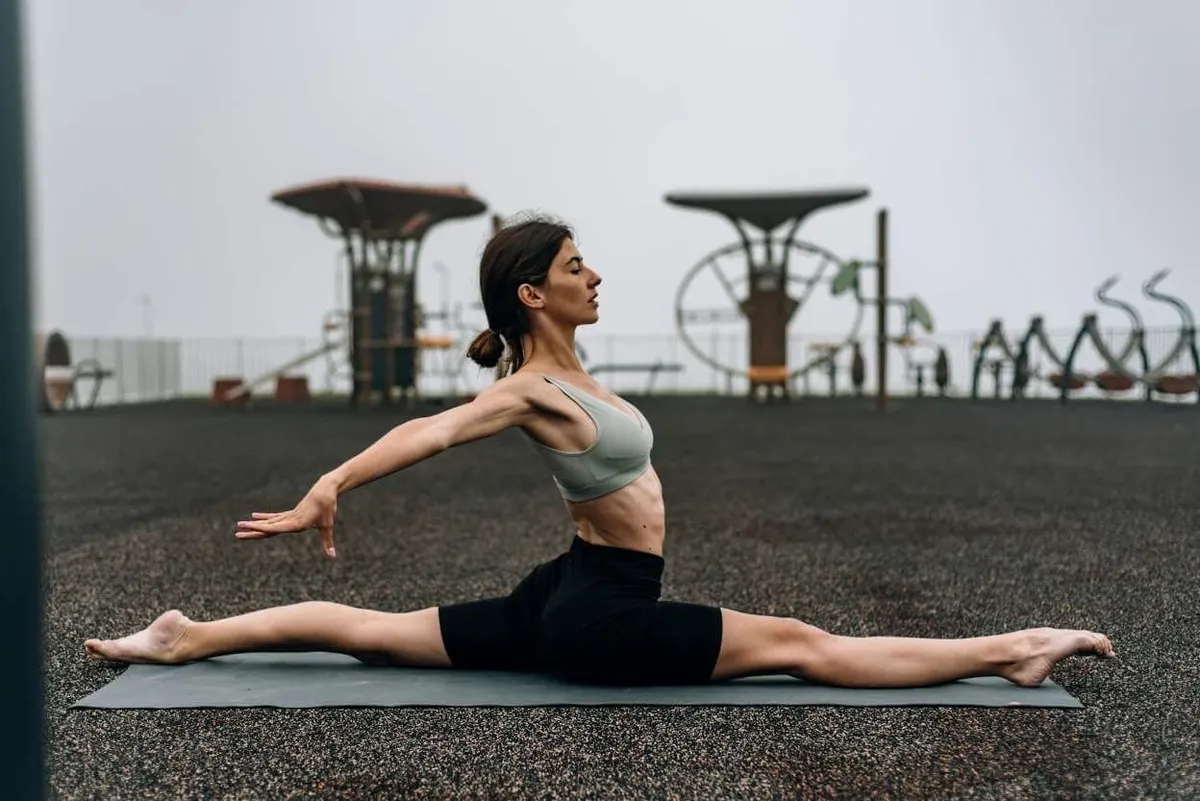
Yoga for Legs
Build stronger, more flexible legs with live, expert-guided yoga. Simple poses for hamstrings, quads, and calves, plus safe practice tips. All levels welcome.
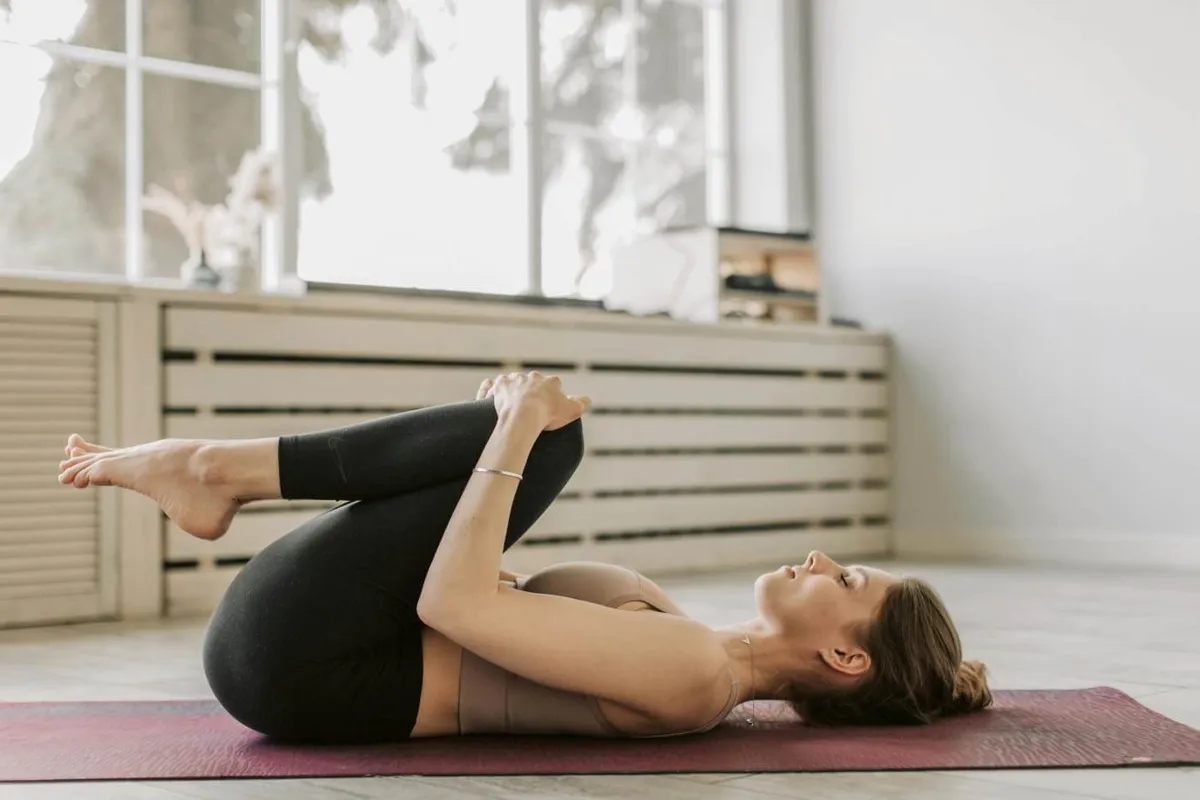
Yoga for Core Strength
Build real core strength with yoga. Five poses covering the front, sides, deep abdominals, and back body, guided live by certified instructors. All levels.
Learn More from Our Journal
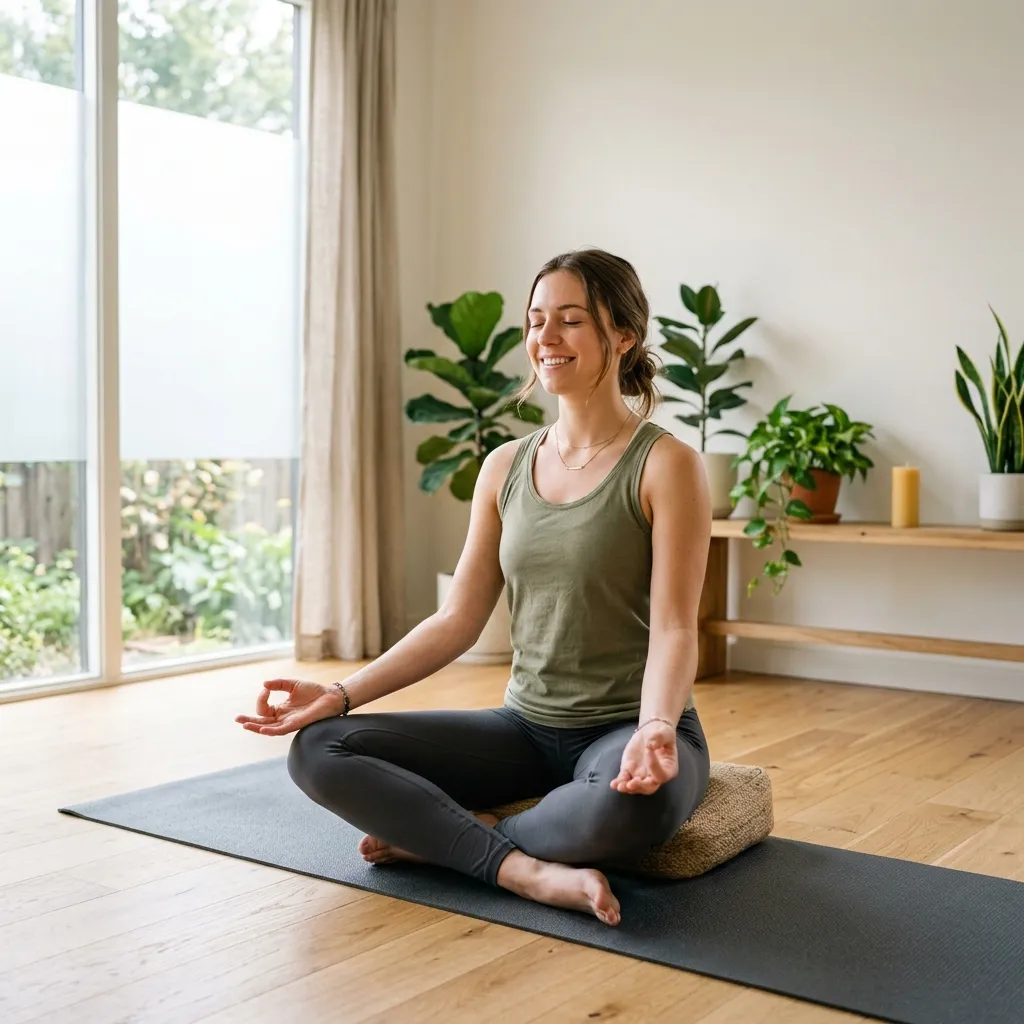
Simple Breathing Exercises to Feel Calmer
Four straightforward breathing exercises you can do anywhere, when to use each one, and the one habit that makes the biggest difference.
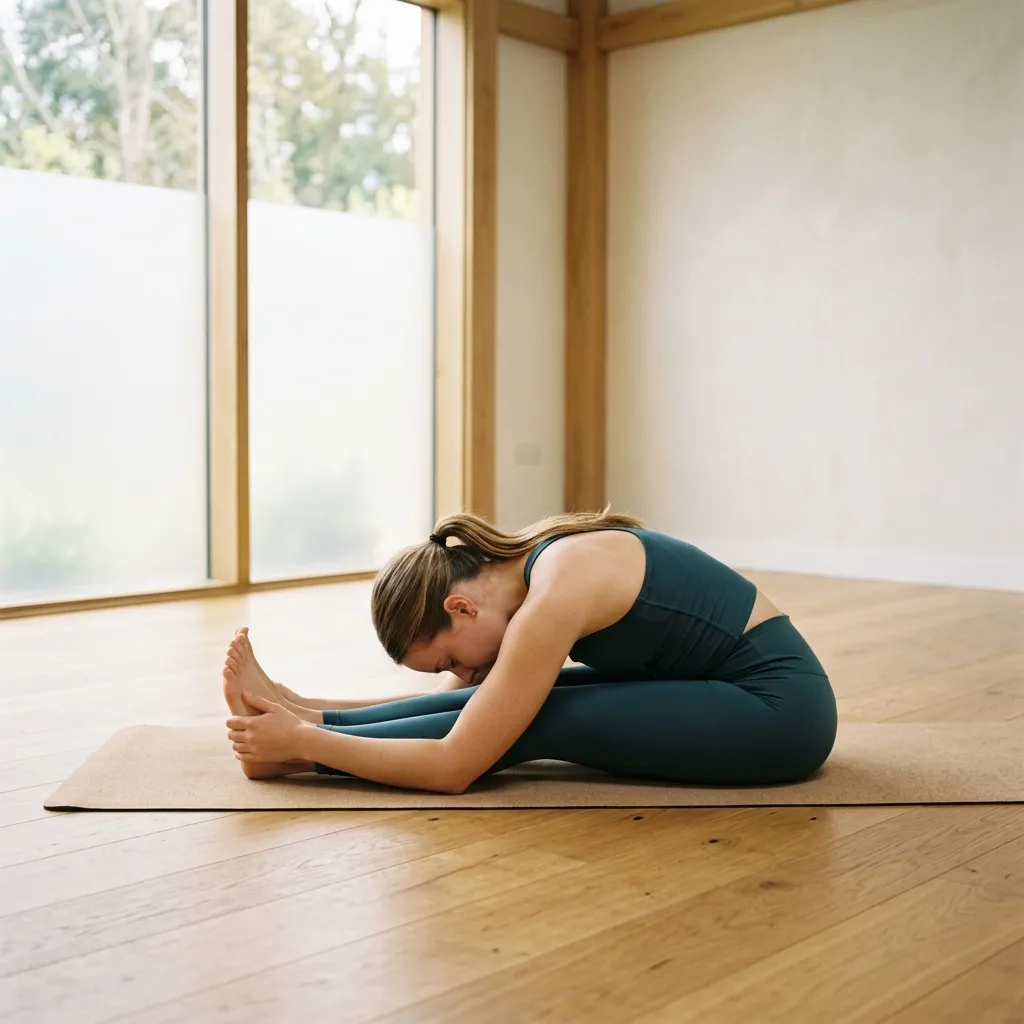
How Long Does It Take to Get Flexible?
A realistic look at how flexibility changes with regular yoga, why consistency matters more than intensity, and what to expect week by week.
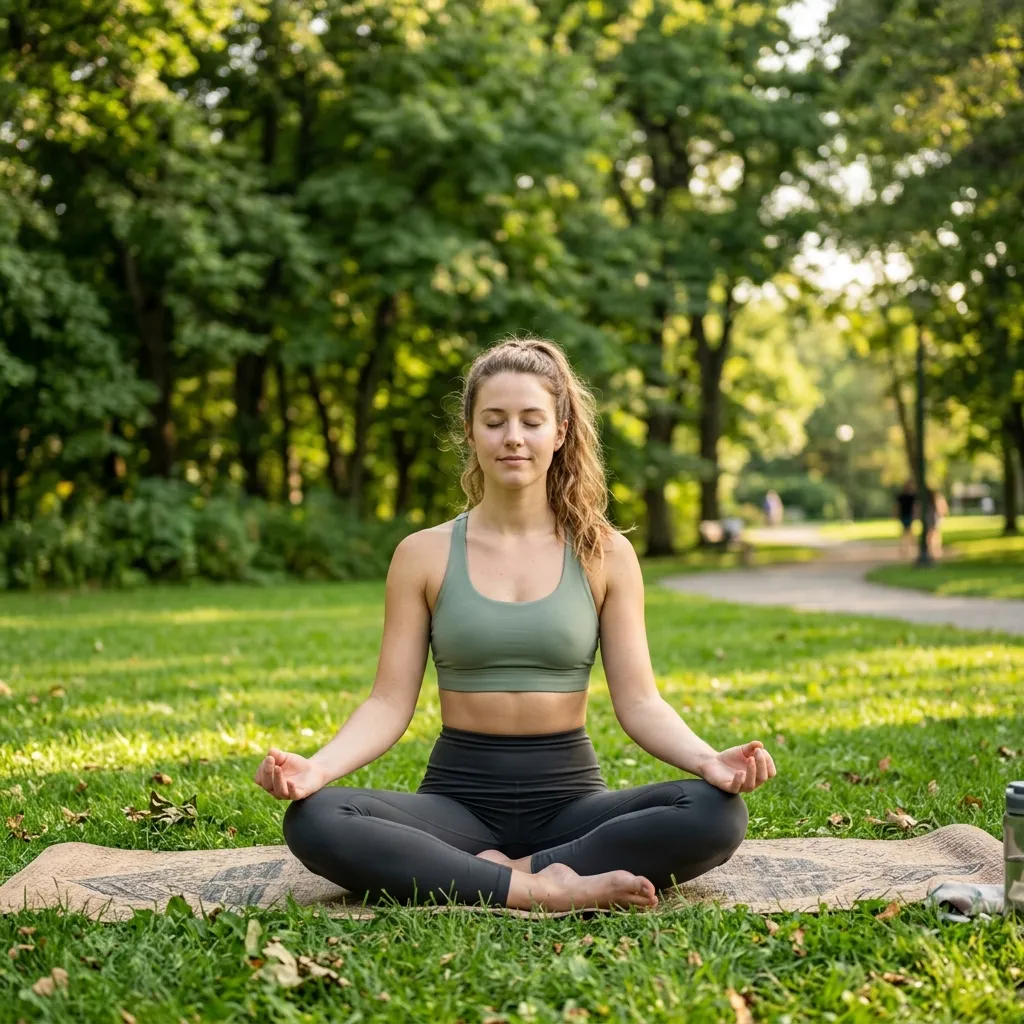
How Do Live Online Meditation Classes Work?
What happens in a live online meditation session, whether your camera stays on, what to sit on, and how a live class differs from using an app.
Questions About Yoga for Better Sleep
Can yoga help me sleep better?
Many people find a slow, calming practice before bed helps them wind down and drift off more easily. Gentle movement and a longer exhale help the body settle after a busy day. Experiences vary, and this works best alongside your healthcare provider guidance.
How long before bed should I practise?
Around 30 to 60 minutes before you want to sleep works well for most people. That leaves time to settle without feeling rushed, and you can do the whole sequence on your bed if you prefer.
Which poses are best before sleep?
Slow, supported shapes rather than energising ones. A seated forward fold, a reclined twist, legs-up-the-wall, and a few minutes lying still are all popular choices for winding down.
Should I avoid any poses at bedtime?
Skip strong backbends, fast flows, and anything that raises your heart rate. Those wake the body up. Keep everything slow, supported, and quiet in the hour before bed.
How long should the sequence take?
Ten to fifteen minutes is plenty. Even three or four minutes of legs-up-the-wall and slow breathing can help if that is all the time you have.
Can I do this in bed?
Yes. The seated and lying-down poses all work on a mattress, and legs-up-the-wall can be done with the legs resting against the wall behind your bed or up on a headboard.
What if my mind is still racing?
Add a few minutes of slow breathing with the exhale a little longer than the inhale. Giving your attention something simple to follow often helps more than trying to stop the thoughts.
Should I speak to a doctor about my sleep?
Yes, if sleep problems are persistent or affecting your daily life. Gentle yoga is a supportive habit rather than a substitute for professional care, so please raise ongoing sleep difficulties with your provider.
Sources & further reading
- Yoga: What You Need To Know — National Center for Complementary and Integrative Health (NCCIH)
- Sleep and Health — U.S. Centers for Disease Control and Prevention (CDC)
- Relaxation techniques: Breath control helps quell errant stress response — Harvard Health Publishing
- How to get to sleep — NHS
- Sleep tips: 6 steps to better sleep — Mayo Clinic
Ready for a Calmer Bedtime?
Book a friendly, no-pressure consultation with YogShri. We will talk through your evenings and how you sleep, then help you build a short wind-down routine you will actually keep.