
Yoga for Shoulders
Live, expert-guided yoga to ease tight shoulders, open the chest, and move your arms more freely.
Can Yoga Help Tight Shoulders?
Yes. At YogShri, live expert-guided classes combine chest opening with upper-back and rotation work that may help ease shoulder tightness and restore easier movement. Results vary.
- Opens the Chest
- Lengthens the short front muscles that pull shoulders forward
- Frees the Upper Back
- Creates space between the shoulder blades where tension gathers
- Restores Rotation
- Moves the joint through the range desk work rarely uses
- Supports Posture
- Balanced strength and length help you sit and stand taller
Why Students Choose YogShri
Shoulder poses are easy to do with the shoulders creeping up toward the ears. Our live classes let a certified instructor spot that and correct it.
Small groups of 10 to 15 for real focus
You are never just a tile on a screen. Your instructor can see when your shoulders are lifting or your neck is straining.
100+ live classes, morning to night
Join a session that fits your day - early morning, lunch break, or evening. Every class is live and interactive, never pre-recorded.
Real-time form correction and feedback
Get clear cues on keeping the shoulders down and the neck long, plus guidance on using a strap when the hands will not meet.
A program shaped around you
We start with a one-on-one chat about where you feel tightest and how you spend your day, then design a practice that fits.
Who Can Benefit from Yoga for Shoulders?
You do not need flexible shoulders to start. A strap makes every arm position accessible, and your instructor will adapt each pose to your range.
Desk Workers
Hours at a keyboard round the upper back and shorten the chest. Regular opening helps undo the shape of the working day.
Anyone on a Phone a Lot
Looking down loads the neck and shoulders. Short, frequent breaks with these poses give the upper body a reset.
Drivers & Commuters
Long spells gripping a wheel keep the shoulders lifted and the chest closed. Gentle opening afterwards helps.
People Who Carry Heavy Bags
A loaded shoulder bag pulls one side up all day. Working both sides evenly helps restore some balance.
Gym-Goers & Swimmers
Pressing and pulling movements tighten the shoulders. Mobility work complements your training and supports comfortable range.
Complete Beginners
No experience or flexibility needed. Every arm position has a strap-assisted version that works from day one.
Yoga Poses for Tight Shoulders
These five poses cover the upper back, rotation, a deeper opening, the chest, and shoulder strength - so together they work the whole joint rather than one direction. Keep the shoulders drawing away from the ears throughout, and use a strap whenever the hands will not meet.
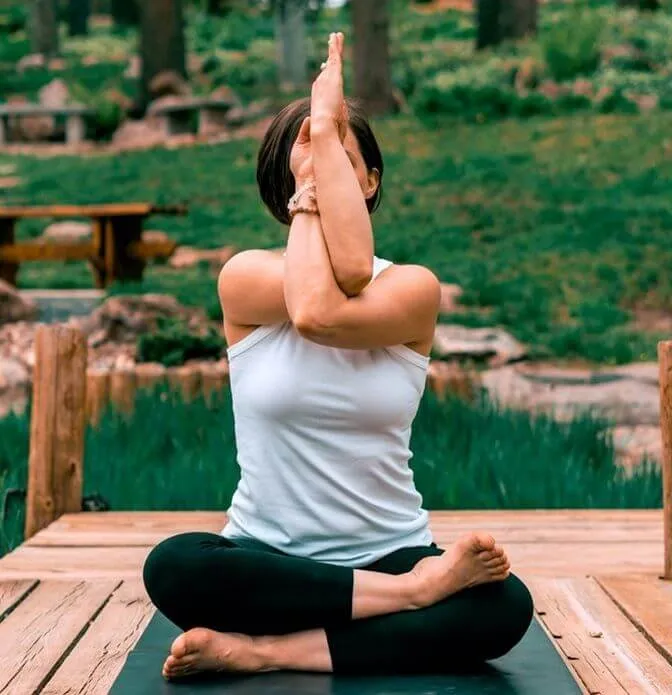
Eagle Arms
A seated or standing wrap of the arms that spreads the upper back.
- Sit or stand tall
- Stretch the arms forward, then cross the right arm under the left
- Bend the elbows and wrap the forearms, bringing the palms toward touching
- If the palms will not meet, simply hug opposite shoulders instead
- Lift the elbows slightly, breathe into the upper back, then swap sides
Why it helps: May help create space between the shoulder blades, where tension gathers when you sit for long stretches.
Start Your Free Trial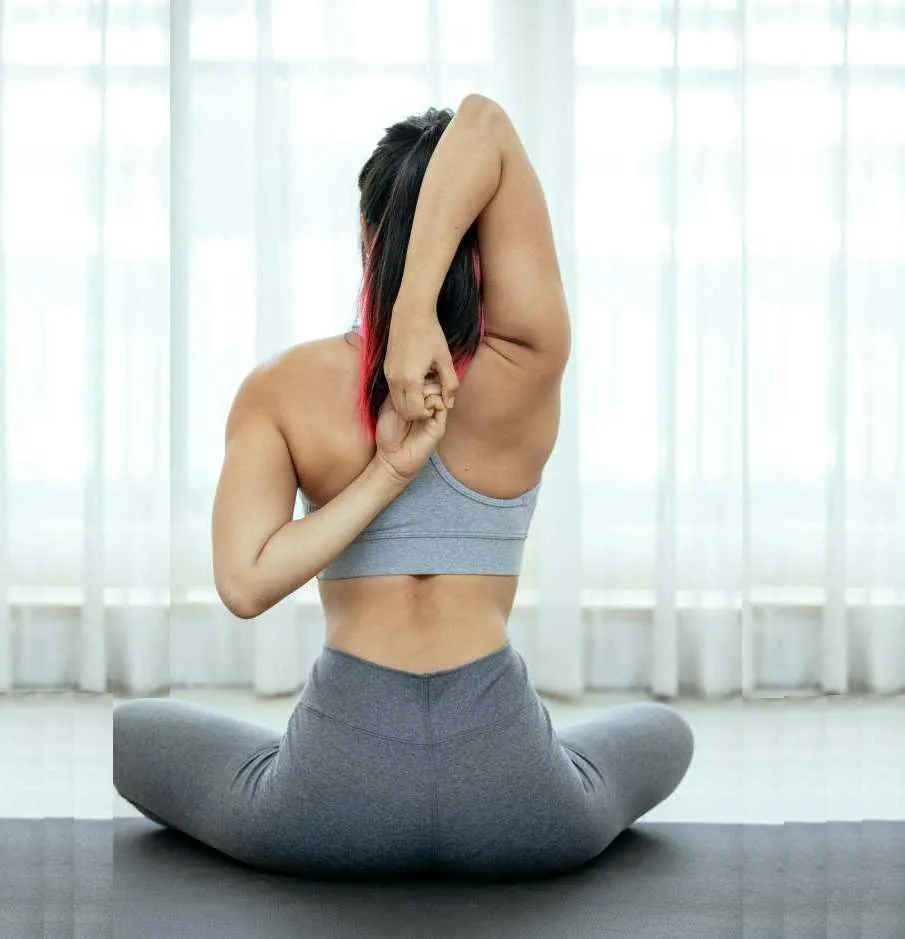
Cow Face Arms
A seated arm position that works both directions of shoulder rotation at once.
- Sit tall with the shoulders relaxed down
- Reach the right arm up, bend the elbow and let the hand drop behind you
- Bring the left hand up behind your back to meet it
- Hold a strap or towel between the hands if they do not reach - this is very common
- Keep the neck long and the head level, then swap sides
Why it helps: May help restore rotation in both directions - the range most people lose first and train least.
Start Your Free Trial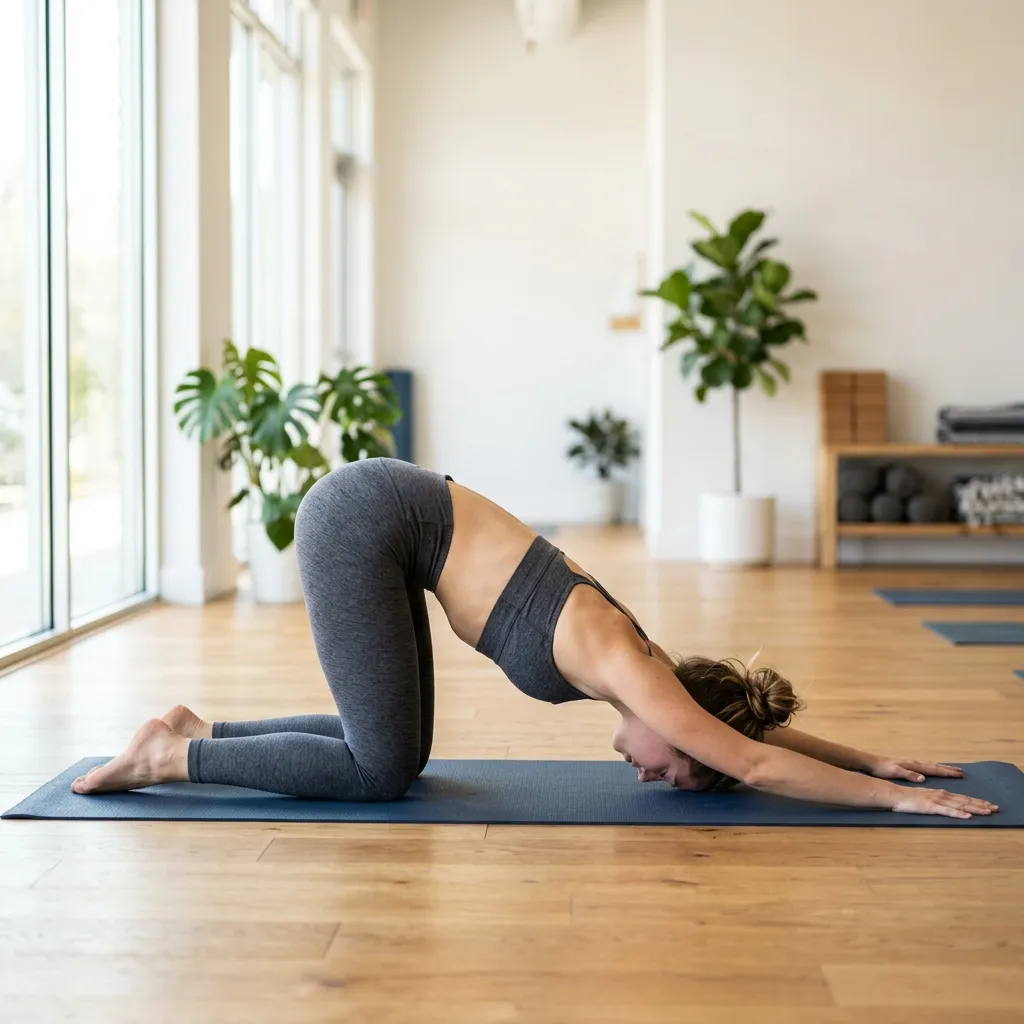
Extended Puppy Pose
A half forward fold with the hips high and the chest lowering toward the mat.
- Start on hands and knees with the hips stacked over the knees
- Walk the hands forward and lower the chest toward the mat
- Keep the hips high rather than sitting back toward the heels
- Rest the forehead on the mat or a cushion and let the neck relax completely
- Breathe slowly, then walk the hands back to come out
Why it helps: The deepest shoulder opening here, with the neck fully supported so nothing strains while you release.
Start Your Free Trial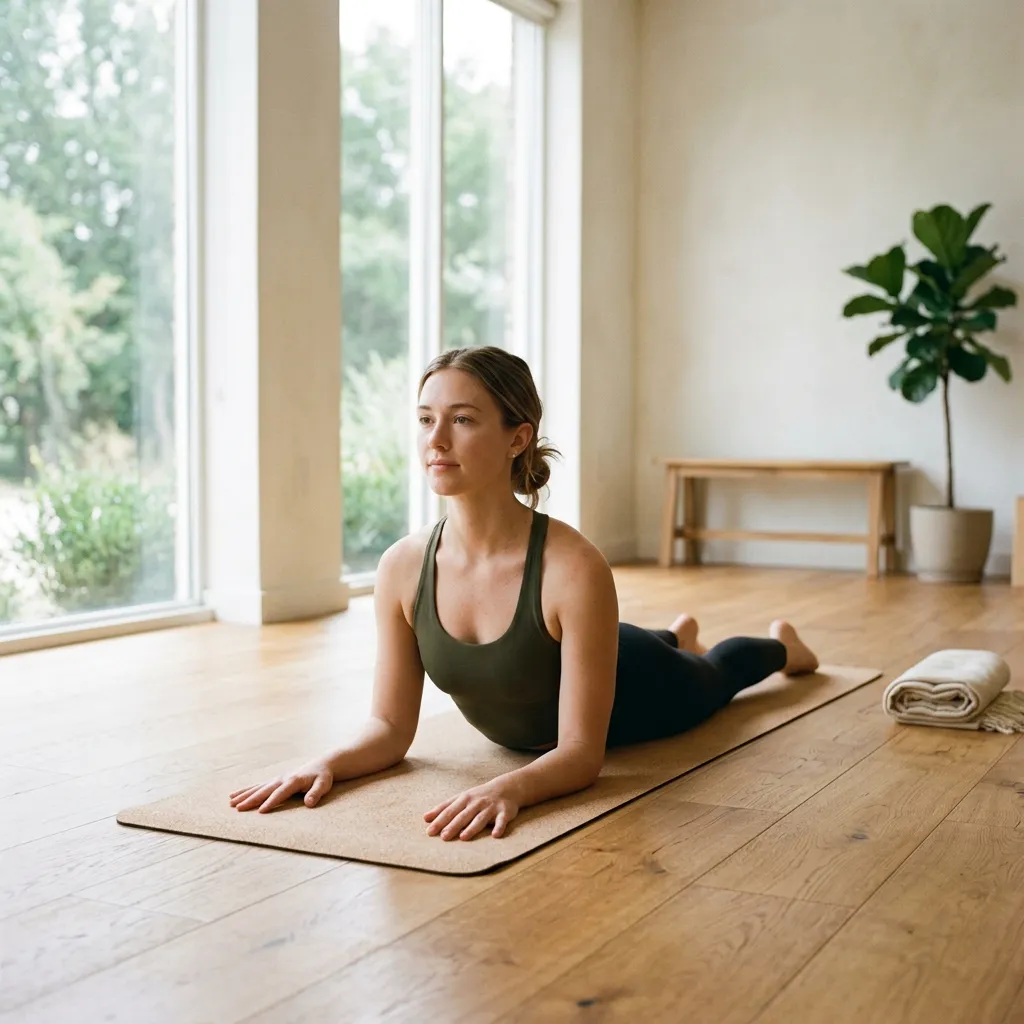
Sphinx Pose
A gentle propped backbend on the forearms that opens across the chest.
- Lie on your front and prop up onto the forearms, elbows under the shoulders
- Press the forearms down and draw the chest gently forward and up
- Slide the elbows further forward for a gentler version
- Keep the shoulders sliding down away from the ears and the neck long
- Lower slowly and rest with the head turned to one side
Why it helps: Opens the short front-body muscles that quietly pull the shoulders forward - the piece most shoulder routines miss.
Start Your Free Trial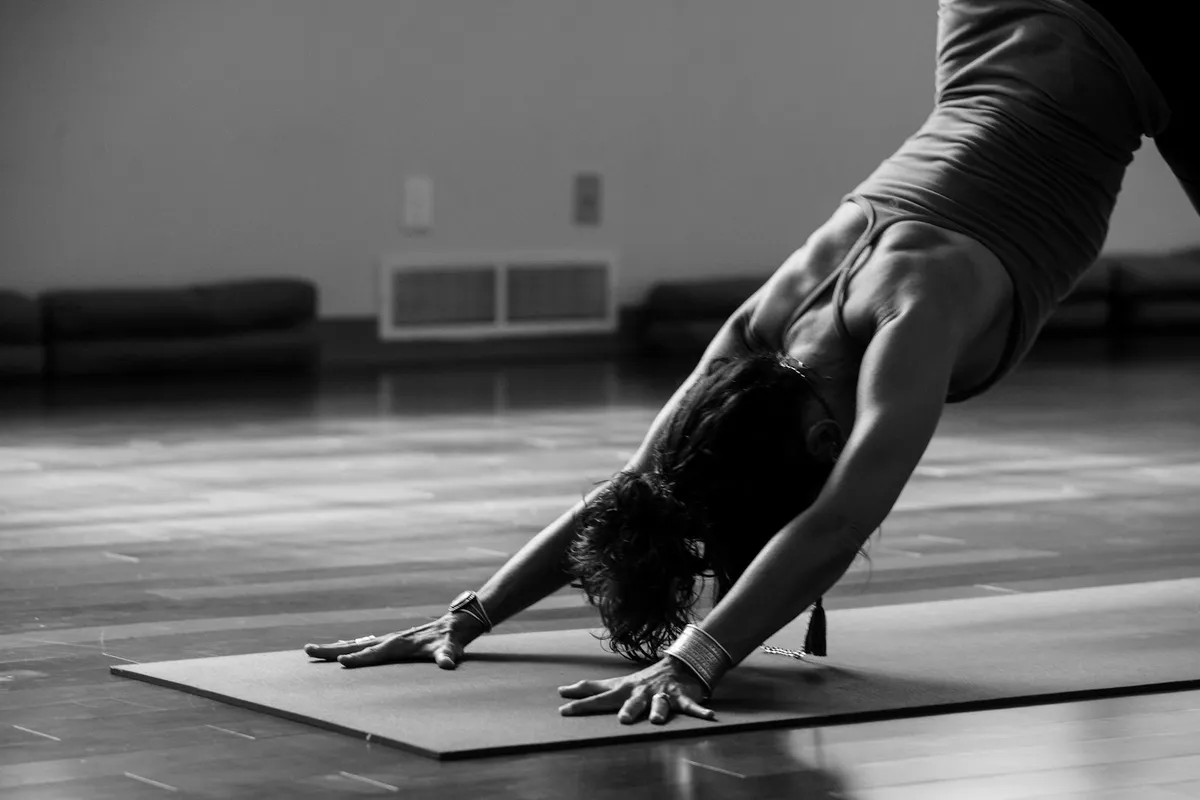
Downward-Facing Dog
An inverted V that lengthens the shoulders while asking them to work.
- Start on hands and knees, hands shoulder-width apart
- Tuck the toes and lift the hips up and back
- Keep the knees generously bent so the spine can lengthen
- Press the hands down, rotate the upper arms outward, and let the head hang softly
- Come down to rest whenever you need to - a few short holds beat one long one
Why it helps: Balances the stretching with strength, so the shoulders build support as well as range.
Start Your Free TrialThe Benefits ofYoga
A consistent practice offers several connected benefits that support comfortable, mobile shoulders and an easier upper body.
- Eases TightnessSlow lengthening helps release the chest and upper back that desk work shortens.
- Restores RotationGentle rotation work keeps the shoulder moving through its full comfortable range.
- Builds SupportWeight-bearing poses build strength around the joint, not just flexibility.
- Supports PostureOpening the chest while freeing the upper back helps you sit and stand taller.
- Supports CirculationMindful movement and breathing support healthy blood flow through the upper body.
- Evens Both SidesWorking each side separately helps balance the effects of one-sided daily habits.
- Supports Rest & RenewalSupported poses and slow breath encourage the shoulders to genuinely let go.
- Supports Stress ReliefShoulders hold a lot of everyday tension, and releasing them often feels calming.
Common Mistakes to Avoid
Shoulders are subtle. Most of the value here comes from where you are not straining rather than how far you reach.
Letting the shoulders creep up toward the ears
Draw them down and back before you begin each pose. A shrugged shoulder cannot release, however long you hold the shape.
Forcing the hands to clasp behind the back
Use a strap or towel between the hands. Straining to grip changes the whole pose and puts the joint in an awkward position.
Only stretching between the shoulder blades
Open the chest too. If the front stays short it keeps pulling the shoulders forward no matter how much you work the back.
Craning the neck in propped backbends
Keep the neck long and the gaze forward. Lift from the breastbone rather than throwing the head back.
Working only one side, or unevenly
Give both sides the same time even when one feels tighter. Uneven practice tends to reinforce the imbalance.
Pushing into weight-bearing poses with sore shoulders
Swap to a forearm or knees-down version, or skip it. Loading an unhappy shoulder rarely helps and often sets you back.
Practising Shoulder Yoga Safely
This is general wellness guidance rather than medical advice. The shoulder is the most mobile joint in the body and also the easiest to overload, so this practice works best alongside your healthcare provider guidance - please check with your doctor or physiotherapist first if you have a shoulder injury, a frozen shoulder, a diagnosed joint condition, or have had shoulder surgery.
Do
- Draw the shoulders down away from the ears in every pose
- Use a strap or towel whenever the hands will not meet
- Balance chest opening with upper-back work
- Give both sides equal time, even when one is tighter
- Keep the neck long and the gaze level
- Choose short frequent sessions over one long one
Avoid
- Forcing the arms behind the back or yanking the hands together
- Any sharp, pinching, or clicking sensation in the joint
- Loading a sore shoulder in plank, chaturanga, or full downward dog
- Bouncing or pulsing to reach further
- Shrugging up into the neck while holding a pose
- Practising through numbness or tingling down the arm - stop and seek advice
Key takeaways
- Gentle yoga may help ease shoulder tightness and restore easier movement. Results vary from person to person.
- Open the chest as well as the upper back. A short front body keeps pulling the shoulders forward however much you stretch between the blades.
- Keep the shoulders drawing down away from the ears - a shrugged shoulder cannot release.
- A strap makes every arm position accessible. Not being able to clasp the hands is extremely common and no barrier.
- Short frequent sessions suit shoulders better than occasional long ones, and this works best alongside your healthcare provider guidance.
Explore Yoga for Related Areas
Yoga for the Lower Back
Gentle, beginner-friendly yoga for your lower back. Instructor-guided poses and mindful movement to support mobility and everyday comfort.
Yoga for Legs
Build stronger, more flexible legs with live, expert-guided yoga. Simple poses for hamstrings, quads, and calves, plus safe practice tips. All levels welcome.
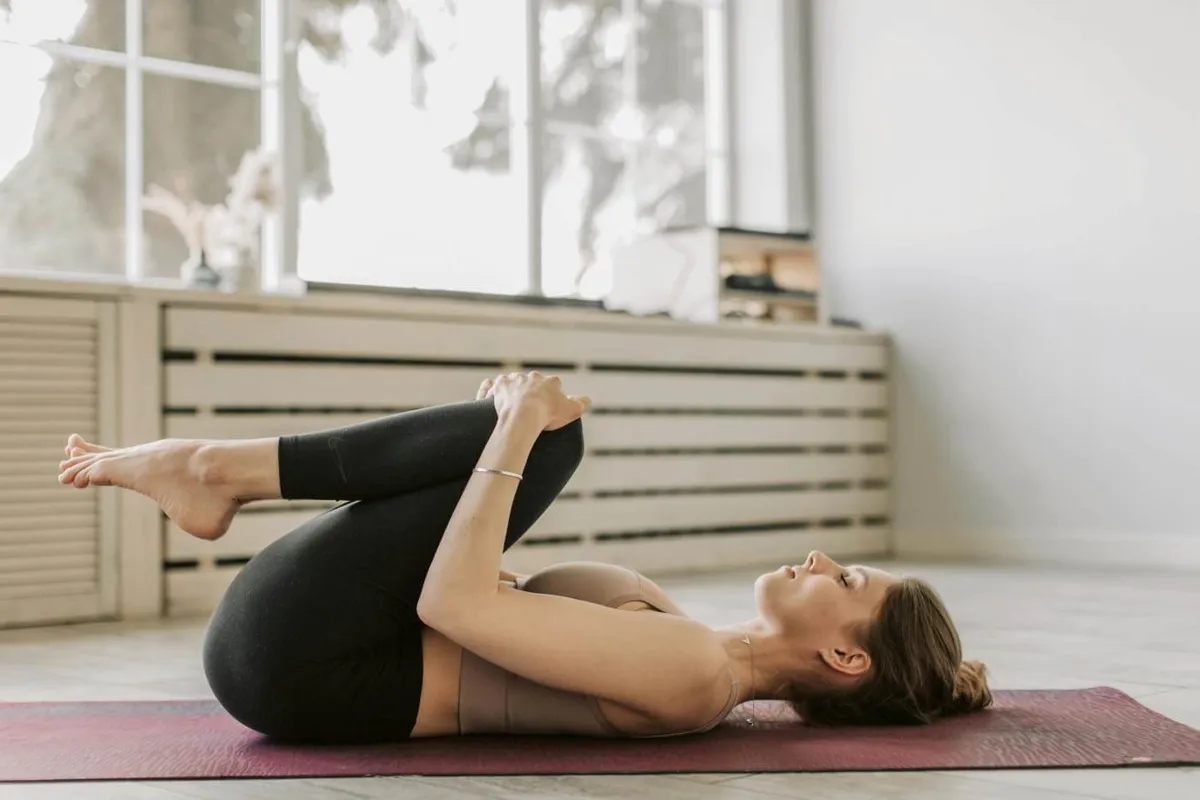
Yoga for Core Strength
Build real core strength with yoga. Five poses covering the front, sides, deep abdominals, and back body, guided live by certified instructors. All levels.
Learn More from Our Journal
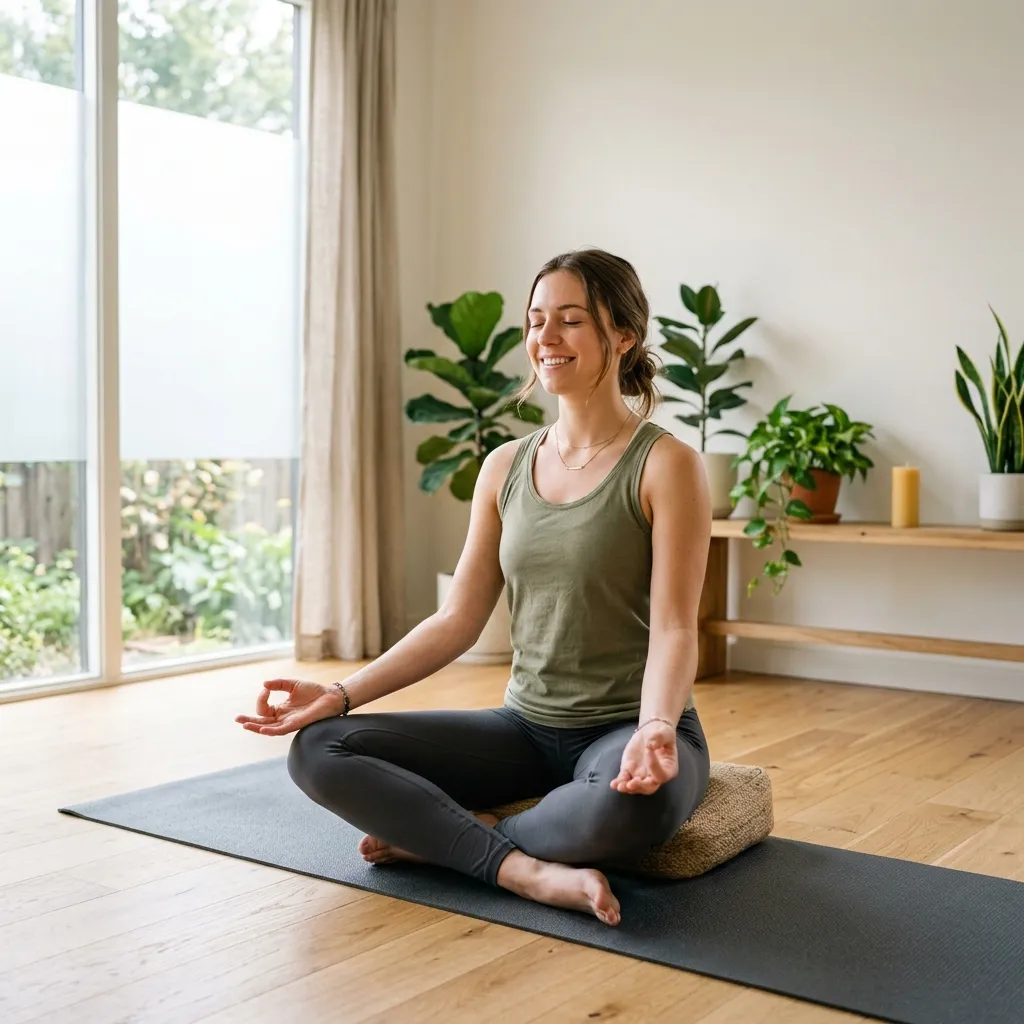
Simple Breathing Exercises to Feel Calmer
Four straightforward breathing exercises you can do anywhere, when to use each one, and the one habit that makes the biggest difference.
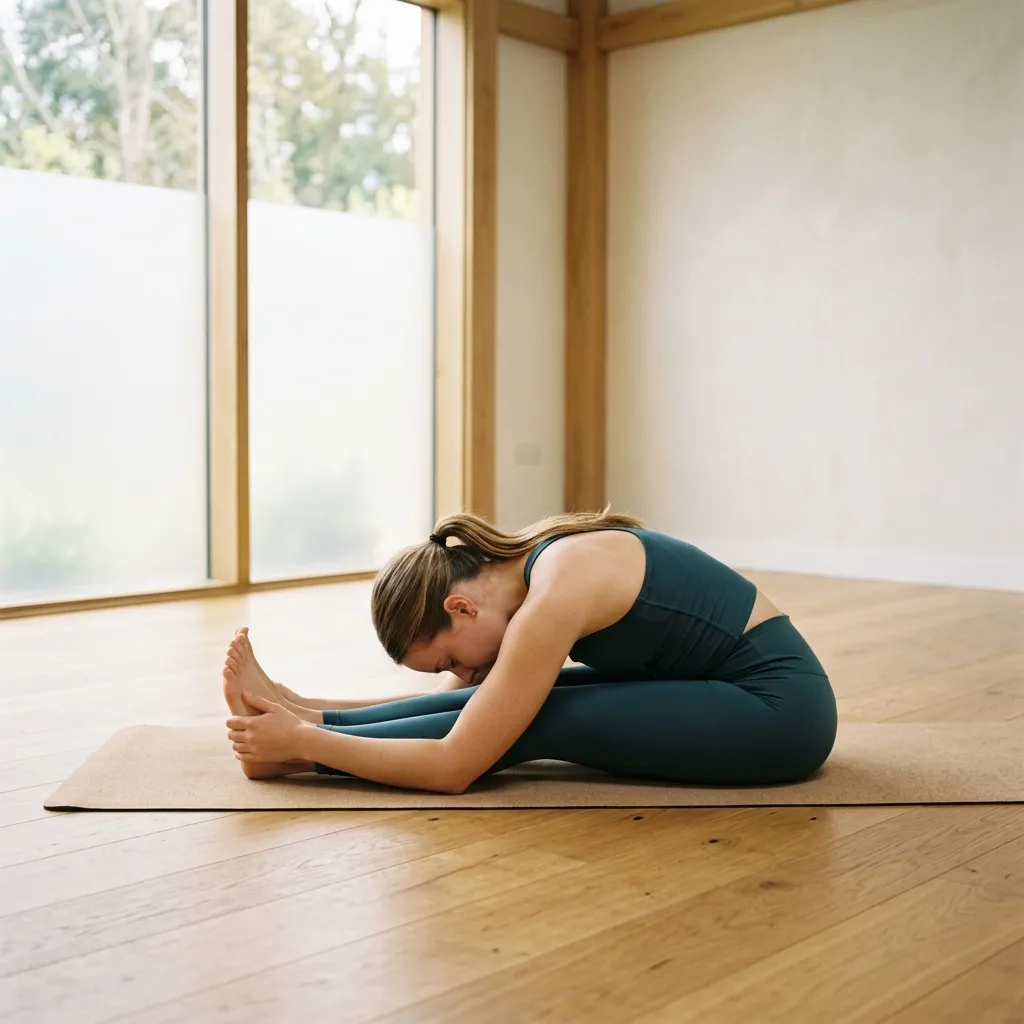
How Long Does It Take to Get Flexible?
A realistic look at how flexibility changes with regular yoga, why consistency matters more than intensity, and what to expect week by week.
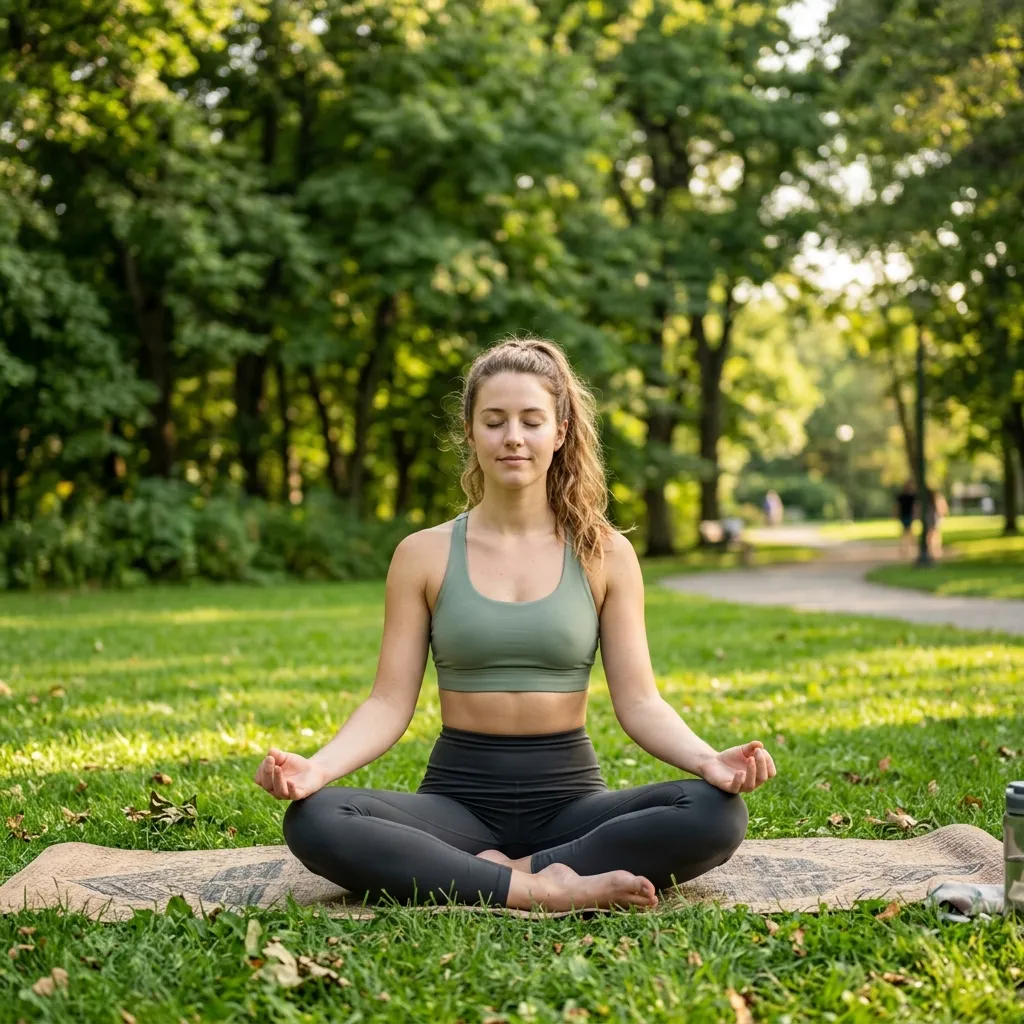
How Do Live Online Meditation Classes Work?
What happens in a live online meditation session, whether your camera stays on, what to sit on, and how a live class differs from using an app.
Questions About Yoga for Shoulders
Can yoga help tight shoulders?
Gentle yoga may help by lengthening the muscles across the chest and upper back and restoring mobility to the shoulder joint. Many people find their shoulders feel freer with a short regular practice. Results vary, and it works best alongside your healthcare provider guidance.
Why do my shoulders get so tight?
Long hours at a desk or on a phone round the upper back and shorten the chest, which pulls the shoulders forward. The muscles between the shoulder blades then work overtime to hold you up, and that is what you feel as tightness.
Which yoga poses are best for shoulders?
Eagle arms and cow face arms work the upper back and rotation, extended puppy pose gives a deeper opening, and sphinx opens the chest. Downward dog adds shoulder strength alongside the stretching.
Should I stretch the front or the back of my shoulders?
Usually both, but the chest is the piece most people miss. If the front stays short, the upper back keeps getting pulled forward no matter how much you stretch between the shoulder blades.
How often should I practise?
A few minutes most days helps more than one long weekly session. Shoulders respond well to frequent short attention, and these poses fit easily into a work break.
Are there poses I should avoid with sensitive shoulders?
Take care with weight-bearing poses such as plank, chaturanga, and full downward dog, and avoid forcing the arms behind the back. Tell your instructor and they will offer a supported alternative.
I cannot clasp my hands behind my back. Is that a problem?
Not at all, and it is very common. Hold a strap, belt, or towel between the hands instead. You get the same benefit, and the gap will narrow gradually with practice.
Should I check with a professional first?
Yes, please do if you have a shoulder injury, a diagnosed joint condition, a frozen shoulder, or have had shoulder surgery, so your teacher can plan with care.
Sources & further reading
- Yoga: What You Need To Know — National Center for Complementary and Integrative Health (NCCIH)
- The importance of stretching — Harvard Health Publishing
- Shoulder pain — NHS
- Stretching: Focus on flexibility — Mayo Clinic
- Physical Activity Guidelines for Americans — U.S. Department of Health & Human Services
Ready for Freer Shoulders?
Book a friendly, no-pressure consultation with YogShri. We will find out where you feel tightest and how you spend your day, then help you build a short practice that fits.