
Yoga Nidra
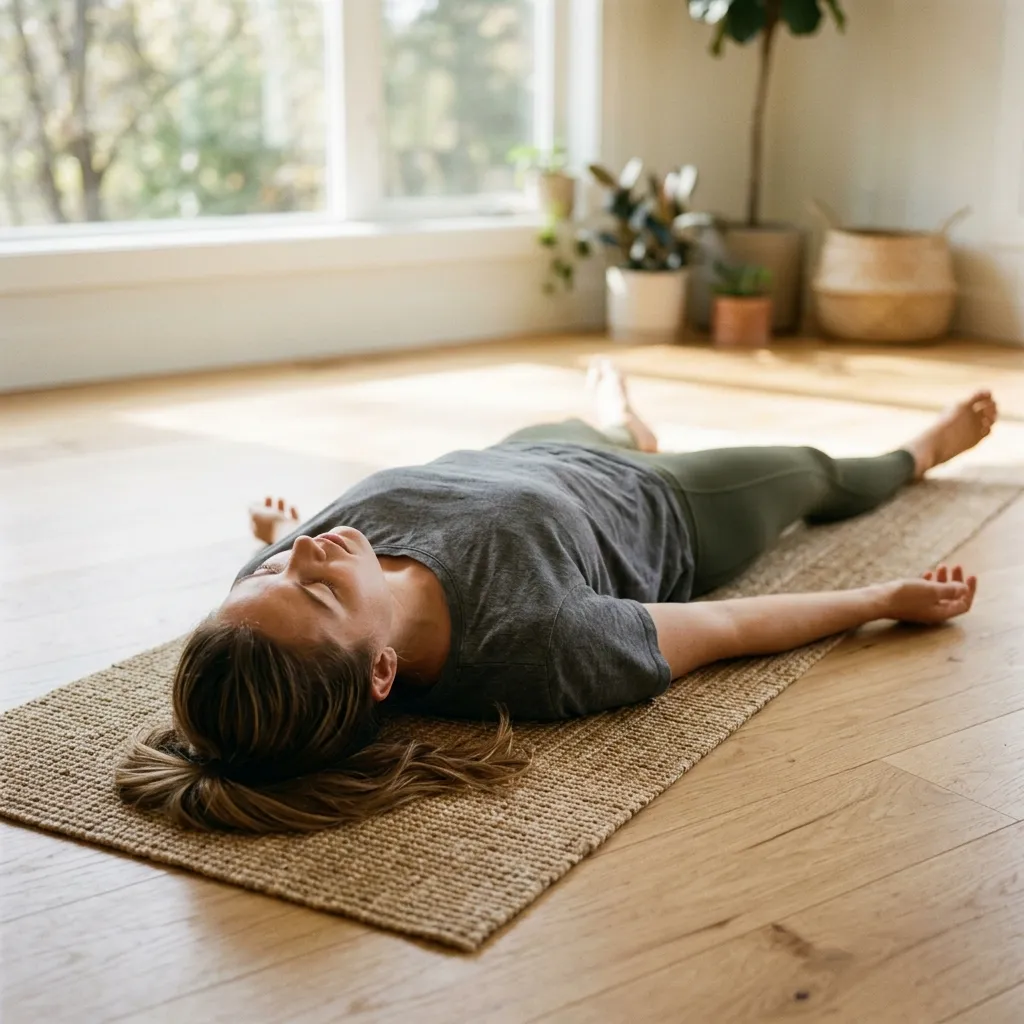
A guided relaxation practice you do lying completely still. No poses, no flexibility, nothing to get wrong.
What Is Yoga Nidra?
A guided relaxation practice done lying still. At YogShri, live sessions lead your attention through the body and breath, which may help you feel deeply rested. Results vary.
- Nothing Physical
- You lie on your back supported by cushions the whole time
- A Voice to Follow
- Your teacher guides every step so the mind has somewhere to rest
- Deeply Restful
- Many people finish feeling as rested as after a long nap
- Truly Beginner-Friendly
- No flexibility, no experience, and nothing you can do wrong
Why Students Choose YogShri
Yoga Nidra lives or dies on the guiding voice. Our sessions are led live by a certified instructor reading the room, not a recording playing at you.
Small groups of 10 to 15 for real focus
You are never just a tile on a screen. Your instructor can help you set up with the right props before you settle.
Guided live, never a recording
A live teacher adjusts pace and tone to the group. That responsiveness is exactly what a recorded track cannot offer.
Clear guidance through every stage
Get help with props, position, and setting an intention, plus somewhere to bring questions afterwards.
A practice shaped around you
We start with a one-on-one chat about your rest, sleep, and energy, then help you fit Nidra into your week.
Who Can Benefit from Yoga Nidra?
If you can lie down and listen, you can do Yoga Nidra. It is the most accessible practice in yoga, and often the best entry point.
Anyone Who Finds Sitting Meditation Hard
If sitting still and watching your breath has never clicked, having a voice to follow while lying down is a very different experience.
People Running on Empty
When you are too tired to exercise but too wired to rest, this asks nothing of you and still leaves you restored.
Anyone With Limited Mobility
No poses, no flexibility, no standing. Cushions and blankets make the position comfortable for almost any body.
Shift Workers & Poor Sleepers
A structured way to rest deeply in the afternoon, which many people find helps when night-time sleep is unreliable.
Busy Parents & Caregivers
Twenty minutes of genuine rest is more restorative than an hour of half-attention on the sofa.
Complete Beginners to Yoga
Nothing to learn and nothing to get wrong. Many students begin here before ever trying a pose.
The Five Stages of Yoga Nidra
A session follows a consistent shape. You do not need to remember any of this - your teacher guides every step - but knowing the arc makes a first session feel far less unfamiliar. You stay lying down throughout.
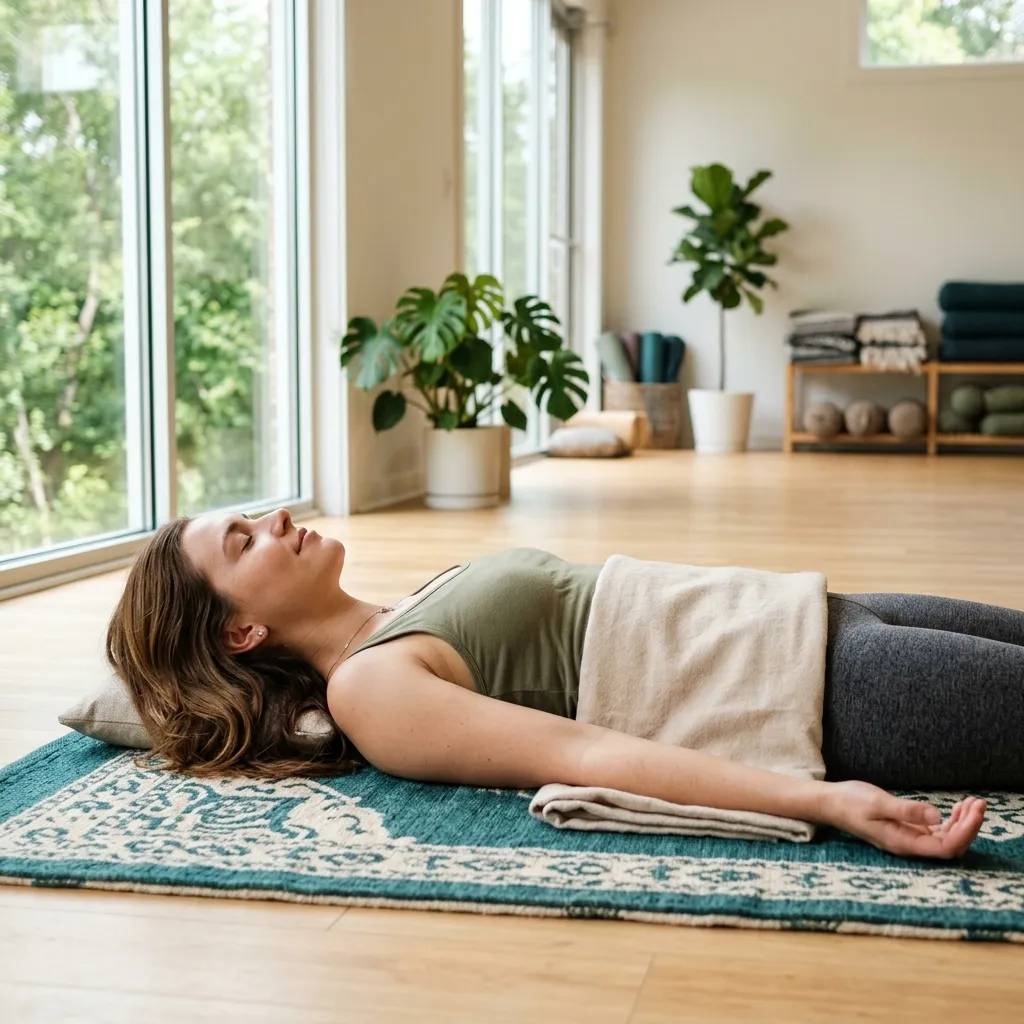
Stage 1 - Getting Settled
Lying down and arranging props so the body can be completely still.
- Lie on your back on a mat, blanket, or bed
- Slide a cushion under the knees to settle the lower back
- Add a folded blanket under the head and cover yourself - body temperature drops as you rest
- Let the arms rest a little away from the body, palms up
- Close the eyes and take a few slow breaths, letting the body get heavy
Why it helps: Getting genuinely comfortable is the whole foundation. If anything nags at you, you will spend the session fidgeting rather than resting.
Start Your Free Trial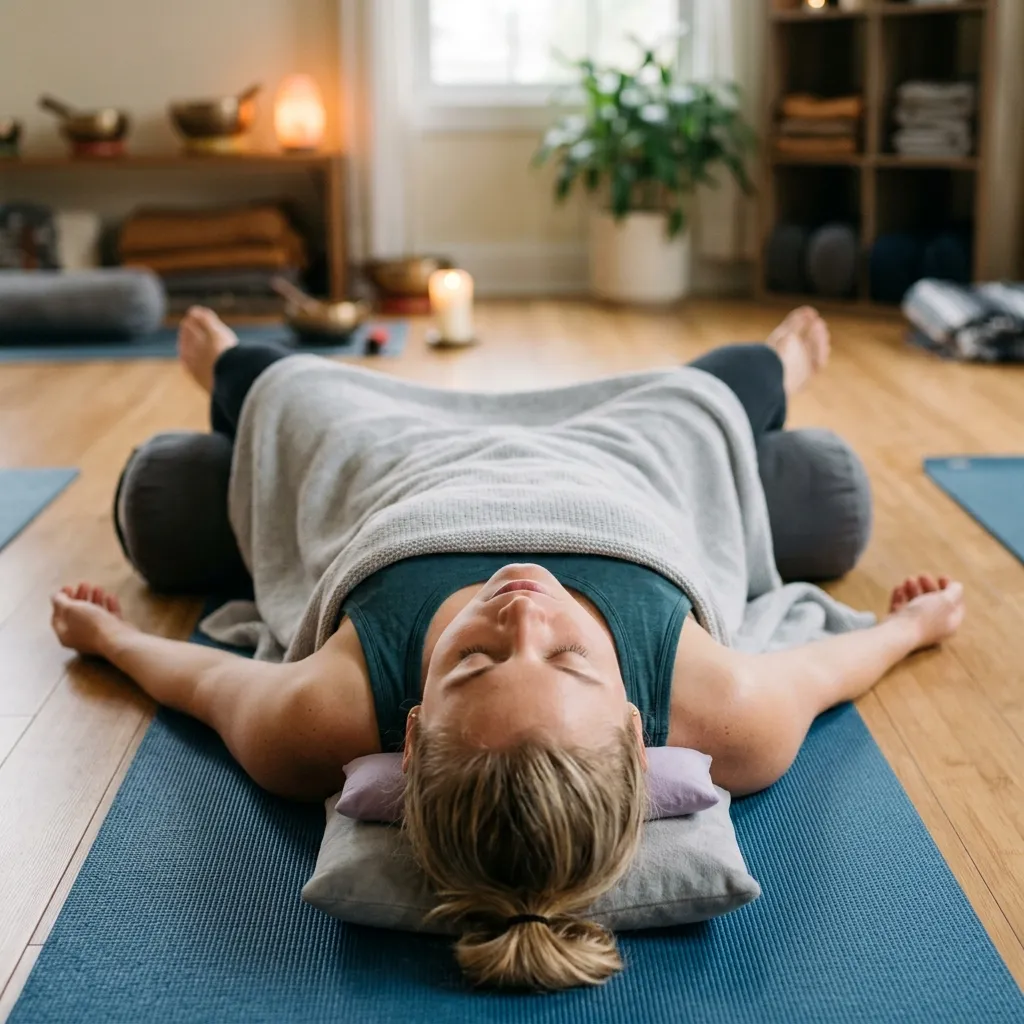
Stage 2 - Setting an Intention
A short, positive phrase you repeat silently to yourself.
- Choose a short phrase in the present tense, such as I am calm and steady
- Keep it simple, positive, and about how you want to be rather than what you want to get
- Repeat it silently three times, without effort
- Let it go completely and return to resting
- This stage is entirely optional if you would rather simply rest
Why it helps: Gives the practice a gentle sense of direction, and revisiting the same phrase over weeks makes it feel increasingly familiar.
Start Your Free Trial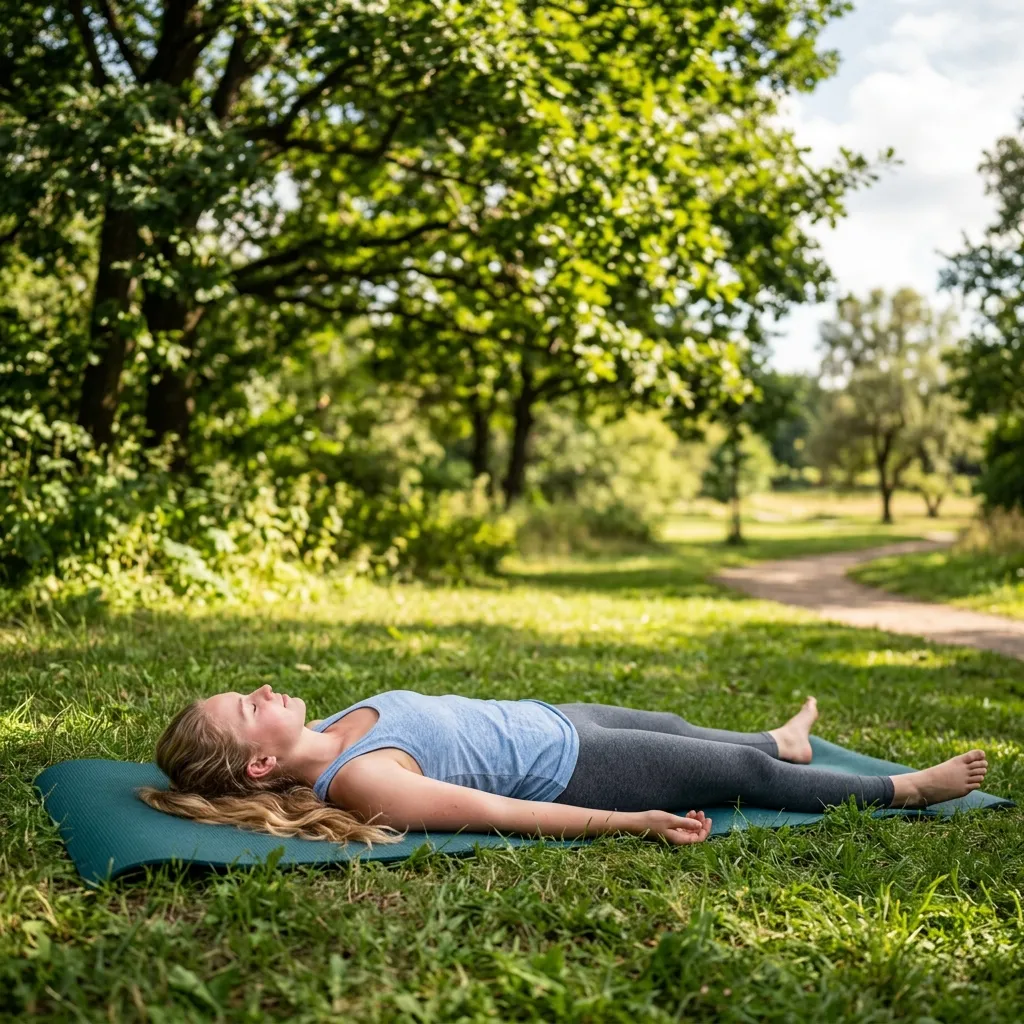
Stage 3 - Rotating Awareness
Your teacher names each part of the body in turn while you simply notice it.
- Listen as your teacher names each area - right thumb, right hand, wrist, and onward
- Simply notice each part as it is named. There is nothing to feel or achieve
- Do not try to relax anything deliberately - the noticing does the work
- If your attention wanders, rejoin wherever the voice happens to be
- Stay lying completely still throughout
Why it helps: This is the heart of the practice. Following the voice from part to part occupies the mind gently, and the body lets go without you trying.
Start Your Free Trial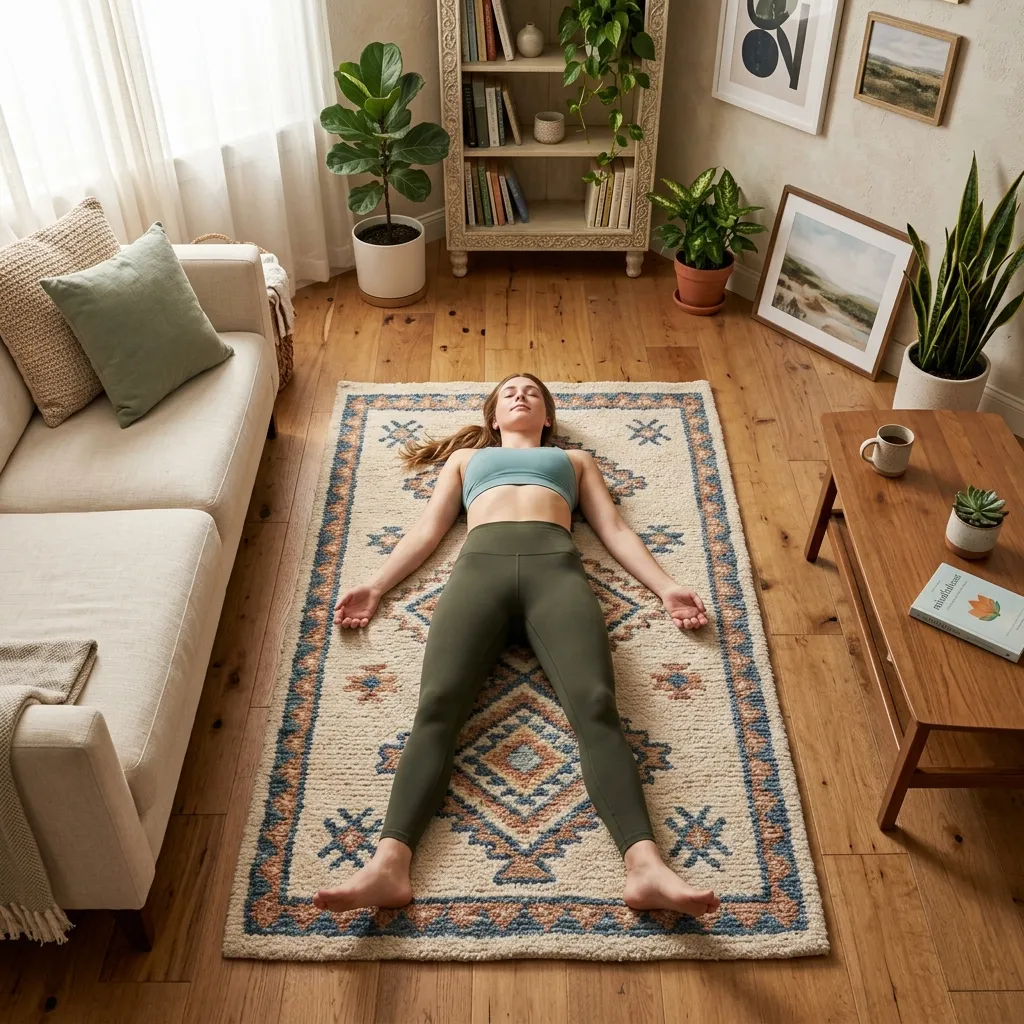
Stage 4 - Breath & Imagery
Simple breath awareness followed by gentle guided imagery.
- Follow your natural breath as your teacher counts, without changing it
- Then let the images your teacher offers arrive as they come
- There is no need to picture anything clearly or to try hard
- If you drift off to sleep, that is fine - you still receive the rest
- Stay soft and let the voice carry you
Why it helps: Where the practice usually deepens most. Many people lose track of time here, which is exactly the state you are aiming for.
Start Your Free Trial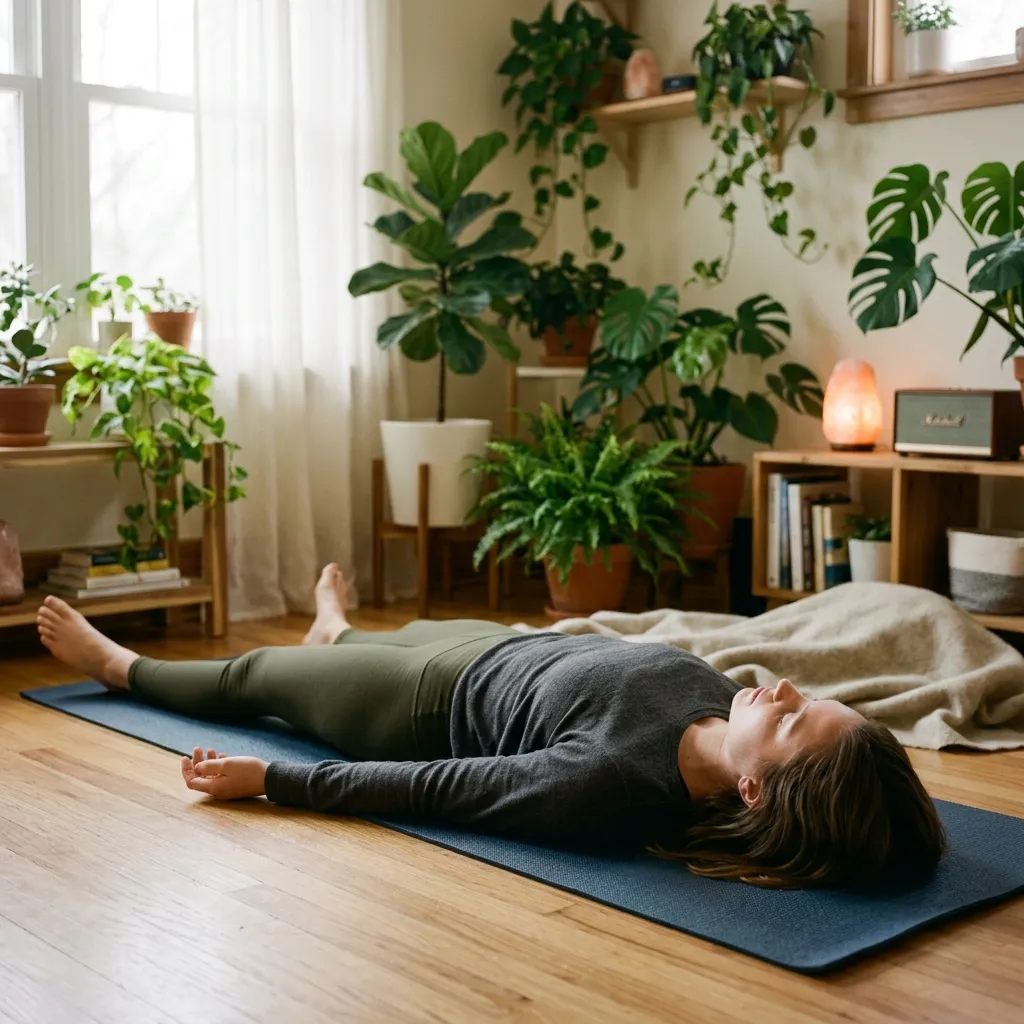
Stage 5 - Returning Slowly
Coming back to ordinary awareness gradually and without hurry.
- Repeat your intention silently once more, if you set one
- Bring your attention back to the room, the sounds, and the surface beneath you
- Wiggle the fingers and toes and take a slow, deeper breath
- Roll onto one side and rest there for a few breaths
- Press up to sitting slowly, and give yourself a quiet moment before standing
Why it helps: Rushing the return undoes much of the calm. A slow, unhurried finish is what carries the rest into the remainder of your day.
Start Your Free TrialThe Benefits ofYoga Nidra
A regular Yoga Nidra practice offers several connected benefits that support deep rest and a steadier day.
- Supports Deep RestMany people finish feeling as restored as after a long nap.
- Supports Restful SleepAn evening session helps many people drift off more easily.
- Supports Stress ReliefStructured rest gives a busy mind somewhere steady to settle.
- Eases TensionThe body releases held tightness without you trying to relax it.
- Builds Body AwarenessMoving attention through the body sharpens your sense of where tension sits.
- Supports FocusFollowing a guiding voice is gentle, sustained attention training.
- Needs No EquipmentA floor or a bed, a cushion, and a blanket is genuinely all it takes.
- Suits Almost EveryoneNo poses and no flexibility, so mobility is rarely a barrier.
Common Mistakes to Avoid
Yoga Nidra is unusual in that trying harder makes it worse. These are the habits that get in the way.
Trying hard to relax
Effort is the one thing that prevents it. Just follow the voice and let the relaxation happen on its own - that is the whole technique.
Worrying about falling asleep
Drifting off is normal and you still get the rest. Over time staying in the in-between state becomes easier, but it is not a test.
Skipping the props
Use a cushion under the knees and a blanket over you. Small discomforts and dropping body temperature will pull you out of the practice.
Practising right after a big meal
Leave an hour or two. Lying down on a full stomach tends to be uncomfortable and makes settling harder.
Jumping straight up at the end
Come back slowly, wiggle the fingers and toes first, and roll to one side before sitting. Rushing undoes much of the calm.
Judging a session as good or bad
Some sessions feel profound and some feel ordinary. Both are doing the same work, so let go of scoring them.
Practising Yoga Nidra Safely
This is general wellness guidance rather than medical advice. Yoga Nidra asks nothing physical and suits most people. It works best alongside your healthcare provider guidance - please speak with them first if you live with trauma, panic attacks, or a mental health condition, since body-focused relaxation can occasionally feel uncomfortable.
Do
- Support the body properly with cushions and a blanket
- Choose a warm, quiet space where you will not be disturbed
- Let yourself fall asleep if it happens - you still benefit
- Lie on your side with props if lying flat is uncomfortable
- Come back slowly at the end, rolling to one side first
- Stop and open your eyes any time you feel uneasy
Avoid
- Practising while driving or operating anything
- Trying to force relaxation or judge your progress
- Lying flat late in pregnancy - practise on your left side instead
- Practising immediately after a large meal
- Standing up quickly at the end
- Using it as a replacement for professional mental-health care
Key takeaways
- Yoga Nidra is a guided relaxation practice done lying still, with no poses and nothing physical required. Experiences vary from person to person.
- A session follows five stages - settling, intention, rotating awareness, breath and imagery, and a slow return.
- Trying hard to relax is the one thing that prevents it. Following the voice is the entire technique.
- Falling asleep is normal and you still receive the rest. It is not a test.
- Props matter more than you would think - a cushion under the knees and a blanket over you make all the difference.
Explore Related Practices
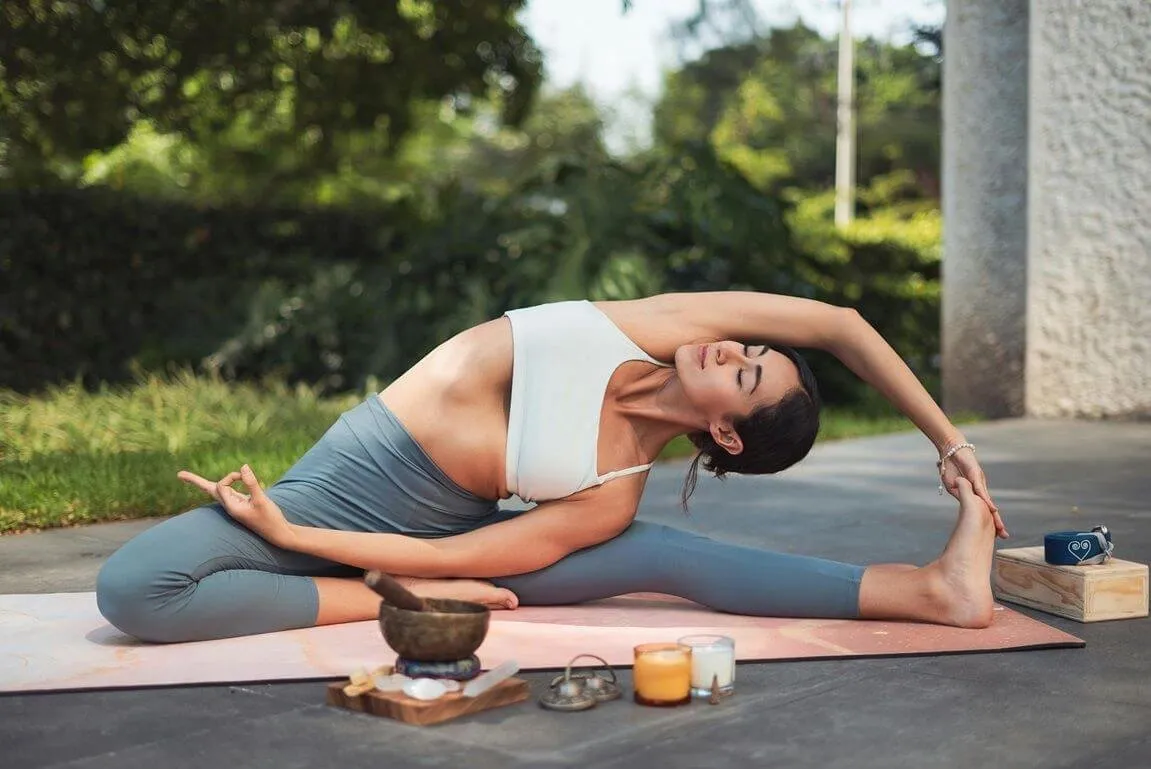
Yoga for the Lower Back
Gentle, beginner-friendly yoga for your lower back. Instructor-guided poses and mindful movement to support mobility and everyday comfort.
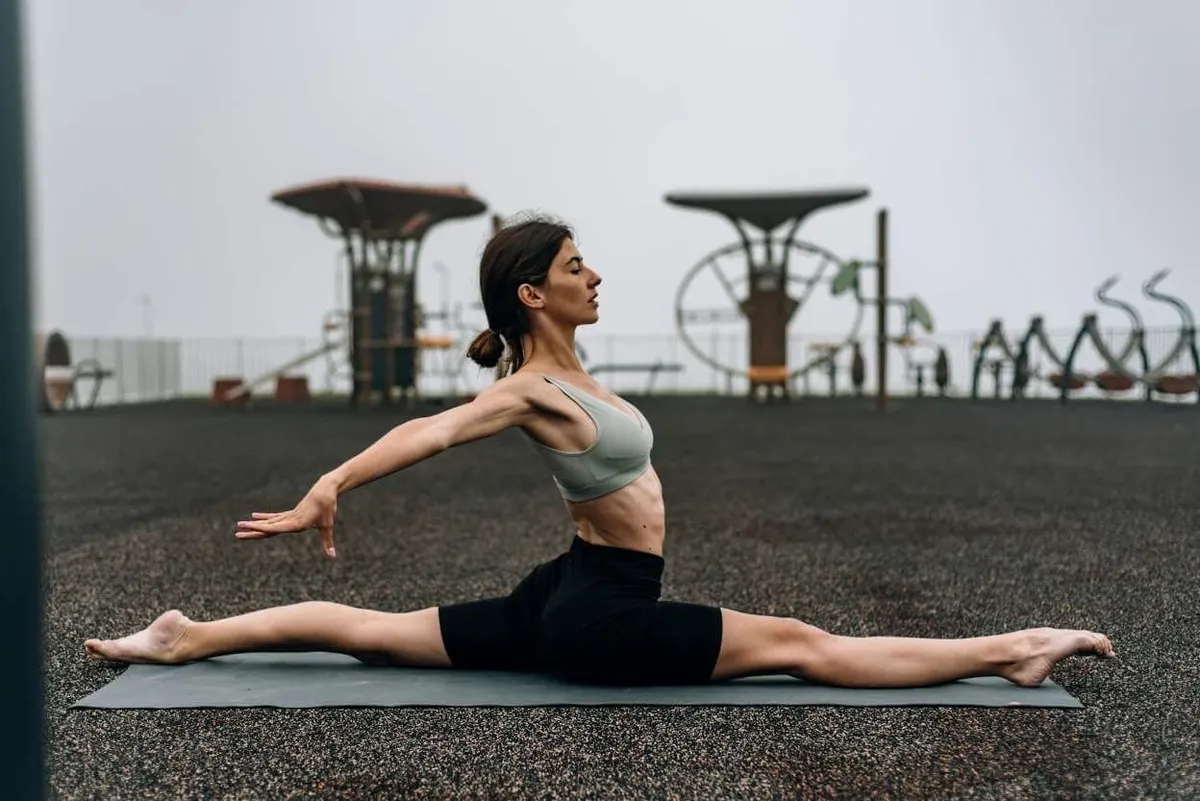
Yoga for Legs
Build stronger, more flexible legs with live, expert-guided yoga. Simple poses for hamstrings, quads, and calves, plus safe practice tips. All levels welcome.
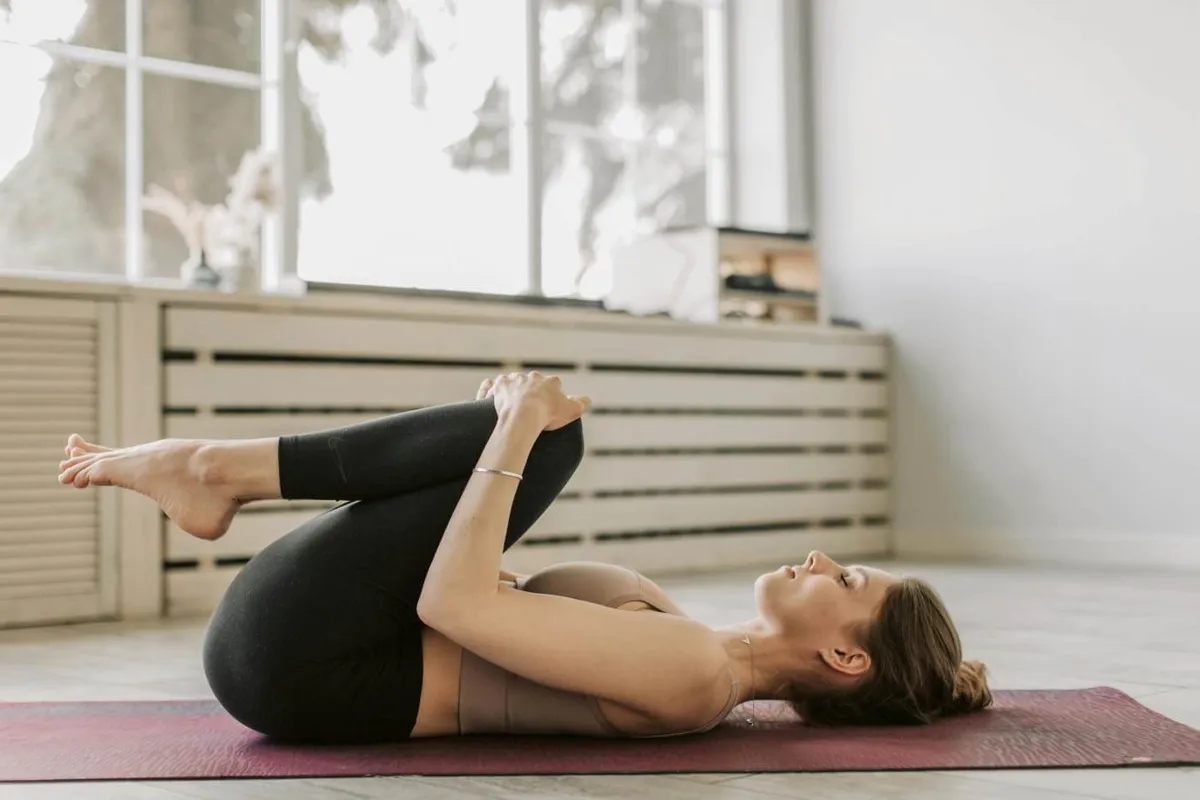
Yoga for Core Strength
Build real core strength with yoga. Five poses covering the front, sides, deep abdominals, and back body, guided live by certified instructors. All levels.
Learn More from Our Journal
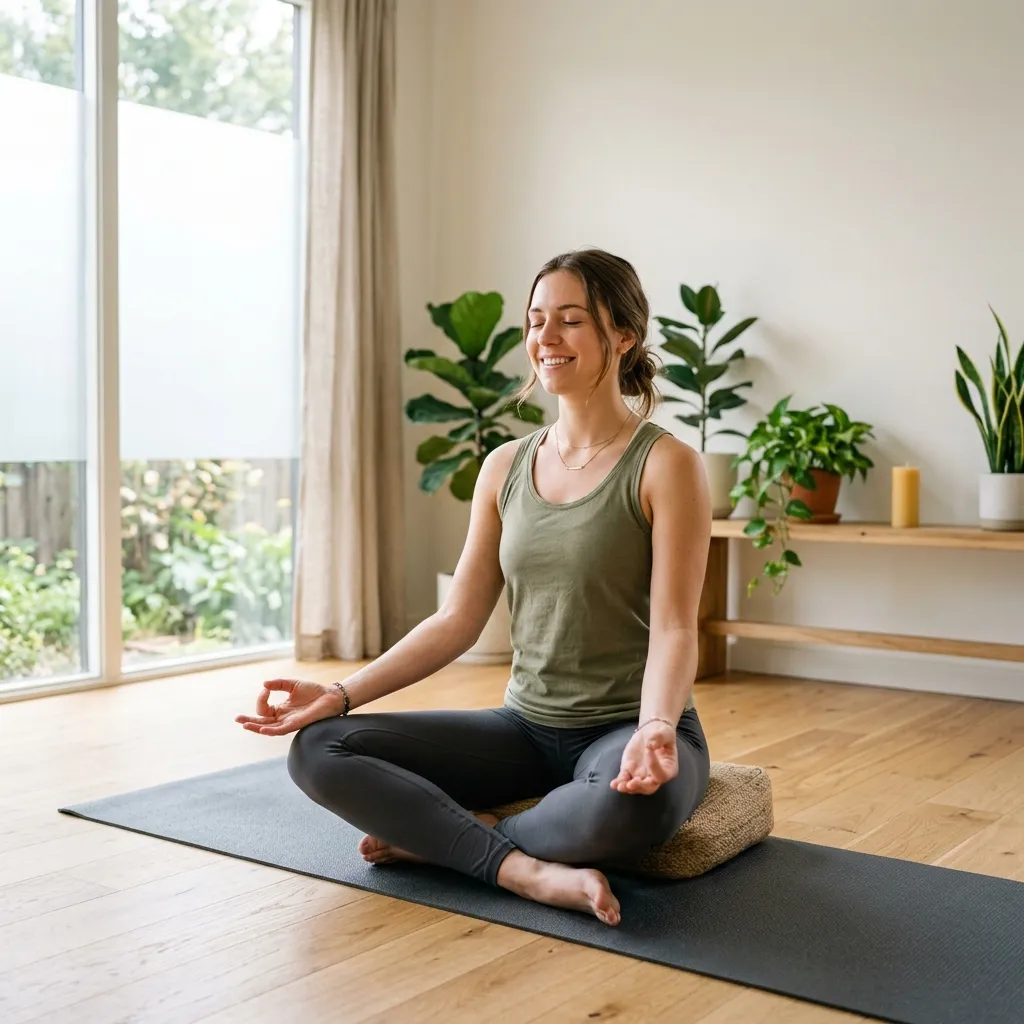
Simple Breathing Exercises to Feel Calmer
Four straightforward breathing exercises you can do anywhere, when to use each one, and the one habit that makes the biggest difference.
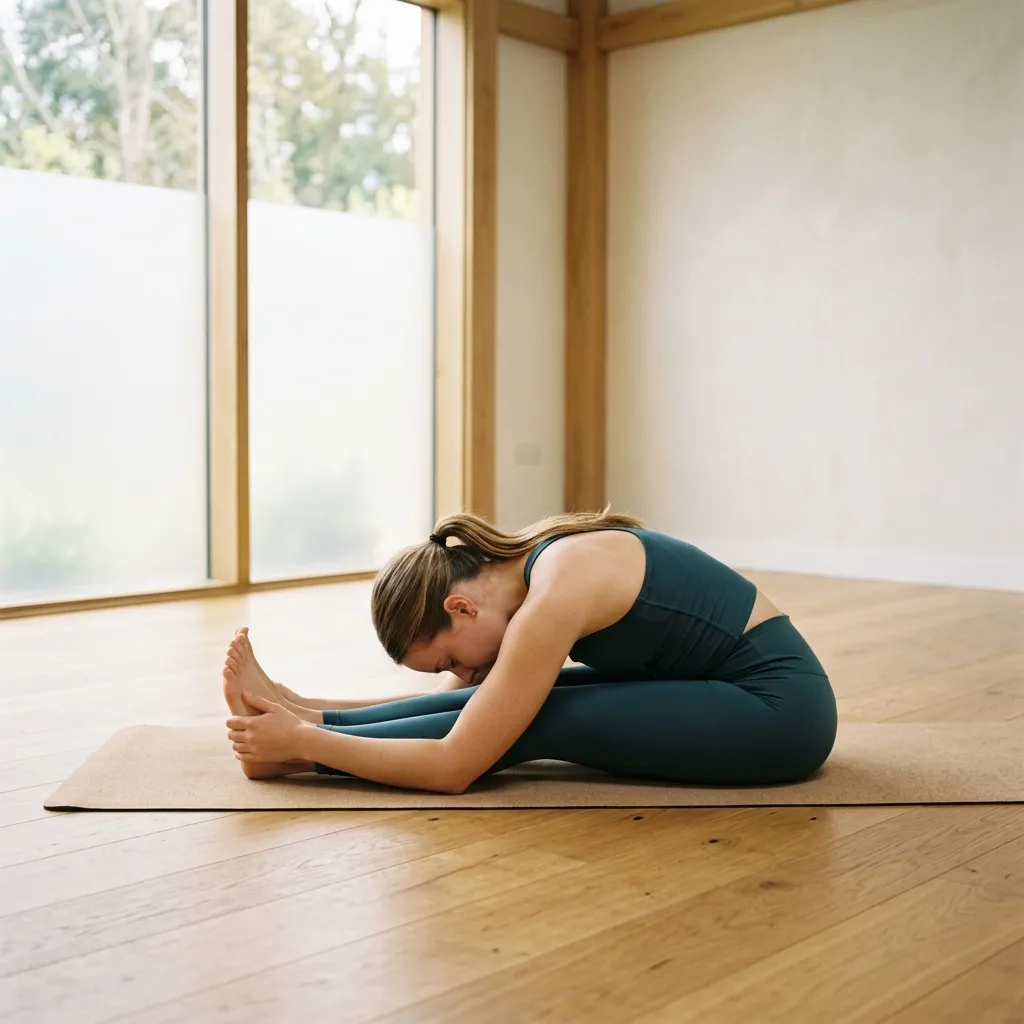
How Long Does It Take to Get Flexible?
A realistic look at how flexibility changes with regular yoga, why consistency matters more than intensity, and what to expect week by week.
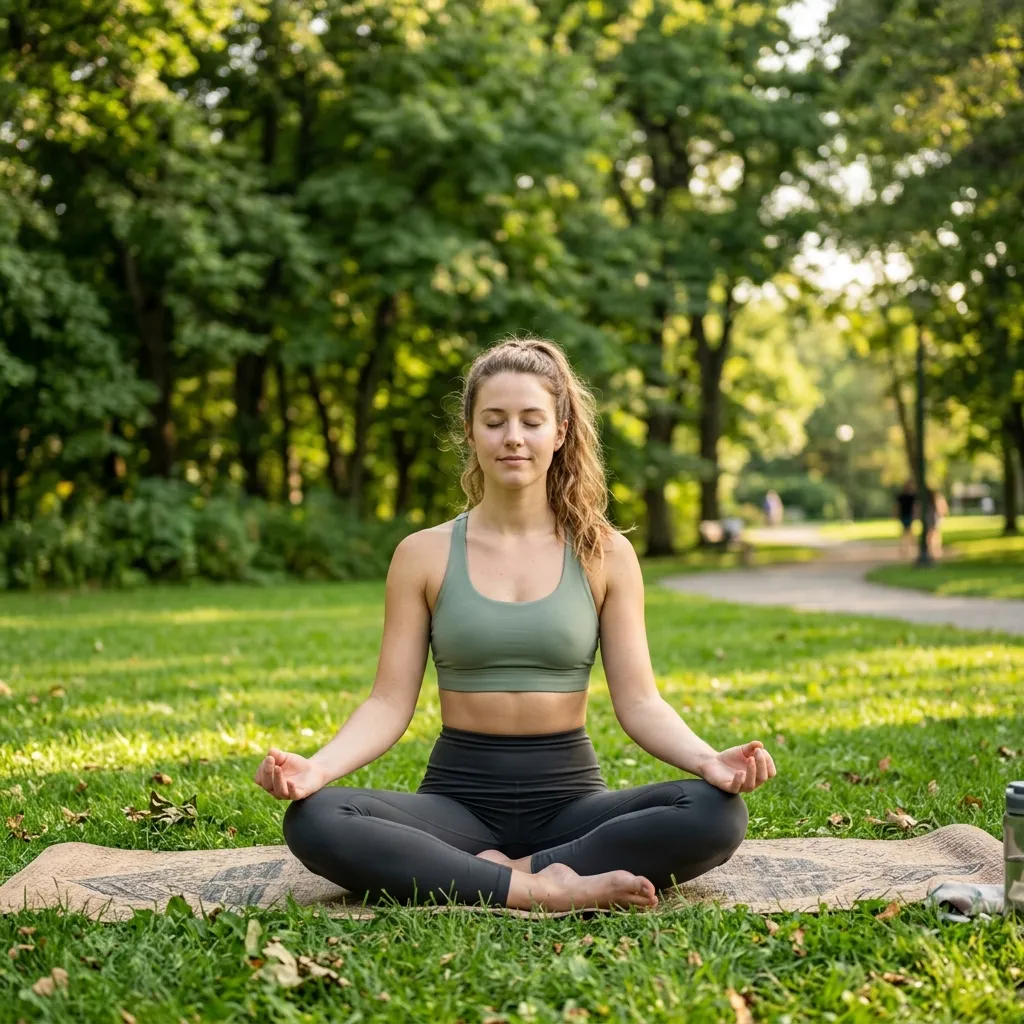
How Do Live Online Meditation Classes Work?
What happens in a live online meditation session, whether your camera stays on, what to sit on, and how a live class differs from using an app.
Questions About Yoga Nidra
What is Yoga Nidra?
Yoga Nidra is a guided relaxation practice done lying completely still while a teacher leads your attention through the body, the breath, and simple imagery. There are no poses and nothing to do physically, which is why many people find it the most accessible practice in yoga.
Is Yoga Nidra the same as meditation?
They overlap but differ in method. Most meditation is done sitting upright with the aim of staying alert. Yoga Nidra is done lying down and deliberately guides you toward the edge of sleep, with a voice to follow the whole way.
Is it normal to fall asleep during Yoga Nidra?
Completely normal, and no cause for concern. Many people drift off, especially at first. You still benefit from the rest, and over time it becomes easier to stay in that in-between state rather than sleeping through.
How long is a session?
Usually 20 to 40 minutes, though shorter 10 to 15 minute versions work well too. Even a brief session can leave you feeling notably more rested.
Do I need to be flexible or experienced?
Not in the slightest. You lie on your back with cushions supporting you. It is the single most accessible practice we offer, and complete beginners often find it the easiest place to start.
When is the best time to practise?
Early afternoon suits many people as a genuine reset, and before bed works well if you want to drift straight into sleep. Avoid practising immediately after a large meal.
What is a sankalpa?
A sankalpa is a short, positive intention you repeat silently near the beginning and end of the practice. Keeping it simple and present tense works best, and it is entirely optional if you would rather just rest.
Is Yoga Nidra suitable for everyone?
It suits most people since nothing physical is required. If you live with trauma, panic attacks, or a mental health condition, body-focused relaxation can occasionally feel uncomfortable, so please speak with your healthcare provider first.
Sources & further reading
- Yoga: What You Need To Know — National Center for Complementary and Integrative Health (NCCIH)
- Relaxation Techniques: What You Need To Know — National Center for Complementary and Integrative Health (NCCIH)
- Relaxation techniques: Breath control helps quell errant stress response — Harvard Health Publishing
- Relaxation techniques: Try these steps to lower stress — Mayo Clinic
- How to get to sleep — NHS
Ready to Rest Properly?
Book a friendly, no-pressure consultation with YogShri. We will talk through how rested you feel and when Nidra might fit your week, then help you get started.